
Table of Contents
Direct Answer
An orchard remote control mower should be selected from the narrowest working row, lowest canopy point, steepest maintained slope, normal vegetation, ground softness, hidden obstacles, and the operator’s line of sight. A tracked, low-profile machine can be useful where a ride-on mower is awkward, but it still needs a measured route, trained operator, exclusion zone, and model-specific slope limits.
The best orchard remote control mower is not simply the machine with the widest deck or largest slope claim. Orchard work rewards controlled maneuvering around trunks, irrigation lines, stakes, fruit, roots, drains, and row ends. Buyers should test the mower in a representative block before committing to a fleet or seasonal work plan.
Why Orchard Mowing Is a Different Job
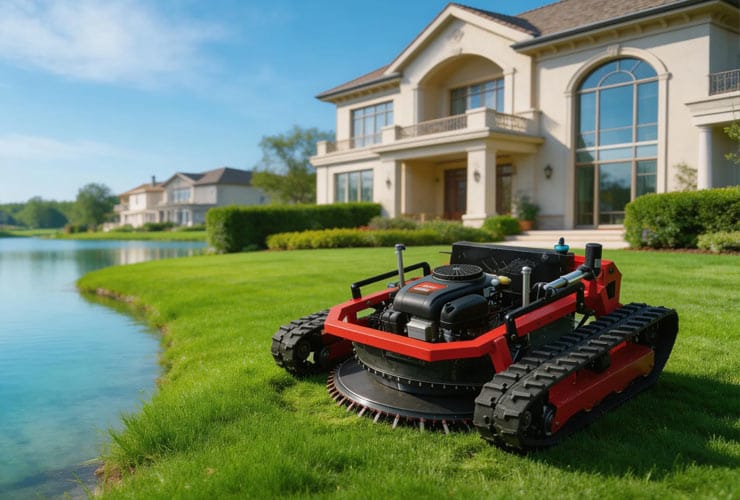
An orchard remote control mower works in a site that is not an open lawn. Tree spacing creates repeated turns, canopy height changes with variety and pruning, and traffic lanes may become rutted after rain or harvest. Fallen branches, fruit, stones, vole holes, and exposed irrigation hardware can appear between visits.
An orchard remote control mower lets the operator stand away from the machine, but remote operation does not remove cutting hazards or solve every access problem. The operator needs a clear view of the mower and the space ahead. A machine that disappears behind a tree row or drops into a swale can become difficult to control accurately.
Penn State Extension explains that repeated mowing can help keep orchard ground cover low as part of vole habitat management. That does not mean every orchard should use the same cutting schedule. Ground-cover decisions should fit local agronomy, erosion control, pest management, weather, and crop practices.
Map the Orchard Before Comparing Machines
Before comparing an orchard remote control mower, begin with a simple block map. Mark row length, headlands, gates, drainage channels, steep sections, low branches, irrigation valves, trellis anchors, and areas that stay wet. Measure constraints rather than estimating them from photographs.
For each block, note whether the orchard remote control mower will cut only the traffic lane, work partially beneath the canopy, or maintain rough perimeter growth as well. These are different jobs. A configuration that moves comfortably in the row center may not fit below drooping branches or between a trunk and a raised irrigation line.
| Site Measurement | How to Record It | Why It Changes the Choice |
|---|---|---|
| Narrowest clear width | Measure between actual obstacles, not row centers | Sets the practical machine-width limit |
| Lowest canopy or trellis point | Measure at the intended mowing line | Determines height clearance |
| Row-end turning area | Measure usable headland after parked equipment | Affects maneuvering and pass pattern |
| Slope and cross-slope | Measure representative difficult areas | Affects traction, stability, and route |
| Wet or soft zones | Map after irrigation or rain | Affects rutting and track performance |
| Hidden assets | Mark irrigation, wires, drains, and anchors | Reduces damage risk |
Row Width and Turning Space
Orchard remote control mower width is only the starting point. Allow clearance for steering corrections, vegetation leaning into the row, trunks that are not perfectly aligned, and attachments or guards that project beyond the track. The operator also needs room to recover if one track climbs a root or rut.
A compact orchard remote control mower may reduce the need for multi-point turns at row ends. However, a very narrow machine can require more passes. Compare total route time, overlap, turning effort, and the percentage of ground that still needs hand trimming.
Before purchase, draw two realistic pass patterns. One may use a center pass followed by targeted edges; another may use overlapping passes near the canopy. The better route is the one that protects trees and infrastructure while keeping the operator in a visible, stable position.
Canopy Clearance and Tree Protection
An orchard remote control mower can contact low branches with its controls, covers, antennas, exhaust components, or guards. Fruit and young wood may also be damaged by contact or discharged debris. Compare total machine height and all upper projections with the lowest maintained canopy area.
An orchard remote control mower should approach trunks slowly and predictably. Operators need a rule for minimum clearance around young trees, graft unions, guards, stakes, and exposed roots. Where vegetation grows directly against a trunk, a separate hand tool or under-row method may be more appropriate than forcing the mower closer.
Review orchard remote control mower discharge direction and debris control. Stones, prunings, wire pieces, and hard fruit can become projectiles. Walk the route before cutting, remove visible debris, and keep workers and bystanders outside the defined area.
Slope, Traction, and Ground Condition
Orchard remote control mower slope capability must be evaluated with the actual surface. Dry, firm ground behaves differently from wet grass, loose soil, leaf litter, or a rutted lane. A published limit is not permission to operate at that value in every condition. Follow the manufacturer’s instructions and reduce the operating envelope when visibility or traction is poor.
OSHA guidance on riding mower rollover hazards emphasizes terrain assessment, obstacle identification, training, and manufacturer limits. Although an orchard remote control mower keeps the operator off the machine, the orchard still needs a route assessment, an exclusion zone, and a plan for edges, ditches, water, and drop-offs.
A tracked orchard remote control mower can spread contact over a larger footprint and often maneuver well on uneven ground, but tracks can still slip, disturb soft soil, or climb an obstacle unexpectedly. During a trial, observe turning marks, rut depth, downhill drift, and control response instead of judging traction only by whether the mower reaches the top.
Match the Cutting System to Vegetation
List the vegetation the orchard remote control mower will meet during the longest interval between cuts. Short grass, tall grass, broadleaf weeds, woody shoots, fallen prunings, and dense perimeter growth place different demands on a cutting system. Ask the supplier which materials are suitable and which must be removed first.
Cutting width affects productivity, but deck design, blade type, power, forward speed, and overlap influence the real result. An orchard remote control mower that leaves heavy windrows or repeatedly stalls in peak growth may create more follow-up work than a narrower configuration operated at a steady pace.
| Vegetation Condition | Trial Question | Planning Response |
|---|---|---|
| Regularly maintained grass | Can it hold the desired height without scalping? | Confirm deck height and route speed |
| Tall mixed weeds | Does material clear without repeated plugging? | Test at realistic density and moisture |
| Woody volunteers | Are they within the approved cutting capability? | Remove oversized stems separately |
| Fallen branches and fruit | Can the route be cleared before mowing? | Add a pre-mow inspection |
| Wet, flattened growth | Does the cut remain acceptable? | Delay work or adjust the mowing plan |
Operator Position and Radio Visibility
Plan where the orchard remote control mower operator will stand for each pass. The position should provide a clear view of the mower, the next obstacle, and anyone approaching the work area. Standing directly downhill, close to the discharge path, or where rows block the signal and sight line is poor practice.
The orchard remote control mower should be tested at realistic row length and around the actual canopy. Confirm control response, emergency stop behavior, warning indicators, and the procedure for a lost or degraded signal. Never rely on an advertised control distance without checking local obstructions and the manual.
Two-person orchard remote control mower work may be appropriate in blocks with public access, blind row ends, or frequent vehicle movement. One person operates while the second manages access and watches hazards. The site owner should define roles before work starts.
Plan a Field Trial
An orchard remote control mower trial should include the narrowest row, normal grass, a difficult patch, a representative slope, low canopy, and a row-end turn. Do not create an extreme demonstration that the crew would never repeat in normal work. The purpose is to test the intended operating method.
- Inspect the trial route and remove stones, wire, branches, and loose irrigation parts.
- Measure row width, clearance, slope, and vegetation height.
- Review controls, emergency stop, exclusion zone, and recovery procedure.
- Begin on the easiest section to confirm steering and cutting height.
- Move to the representative slope and confined row at a controlled pace.
- Record cut quality, missed areas, turning time, soil disturbance, and manual trimming.
- Inspect the machine after the test for wrapped material, impact marks, loose parts, and cleaning needs.
Use the same scorecard for every orchard remote control mower under consideration. A video is useful, but measured clearance, completed area, missed vegetation, and cleanup time make the comparison more reliable.
Seasonal Work Plan
Orchard remote control mower conditions change through the season. Early growth may be soft and dense, summer conditions may become dry and dusty, and harvest can introduce fallen fruit, bins, temporary workers, and extra traffic. The mowing plan should identify periods when access or debris risk changes.
An orchard remote control mower may be assigned to routine row-center work, difficult slopes, headlands, or perimeter control. Define the role clearly so crews do not gradually expand the machine into unsuitable vegetation or hidden hazards. After storms or pruning, reinspect the route before mowing.
Coordinate orchard remote control mower work with irrigation and spray schedules. Wet lanes may rut, while workers conducting other tasks can enter the exclusion zone. A shared block calendar helps prevent conflicting operations.
Transport, Cleaning, and Maintenance
Check how the orchard remote control mower will be loaded, tied down, and unloaded at each orchard. The transport vehicle and ramps must suit the machine weight and dimensions. Confirm gate width, trailer access, and a level loading location before delivery.
Plant material can wrap around blades, shafts, tracks, and guards. Cleaning must follow shutdown, isolation, and blade-stop instructions. An orchard remote control mower used across different farms may also require hygiene procedures intended to reduce movement of soil, weed seed, or plant material; follow local farm biosecurity rules.
Daily orchard remote control mower checks should cover cutting components, guards, fasteners, tracks, visible leaks, controls, emergency stop, and power-system condition. The exact service schedule comes from the manufacturer. Ask which parts should be stocked for the first mowing season and which repairs require trained support.
Buyer Specification Sheet
- Orchard remote control mower use case, orchard type, tree age, and row layout.
- Narrowest clear width, lowest canopy point, and available headland.
- Measured slope, cross-slope, surface condition, and wet areas.
- Normal and maximum vegetation height, density, and stem type.
- Irrigation lines, drains, trellis anchors, roots, rocks, and other obstacles.
- Required cutting height, acceptable finish, and mowing frequency.
- Transport method, storage, cleaning, and expected operating hours.
- Destination country, preferred support language, and spare-parts plan.
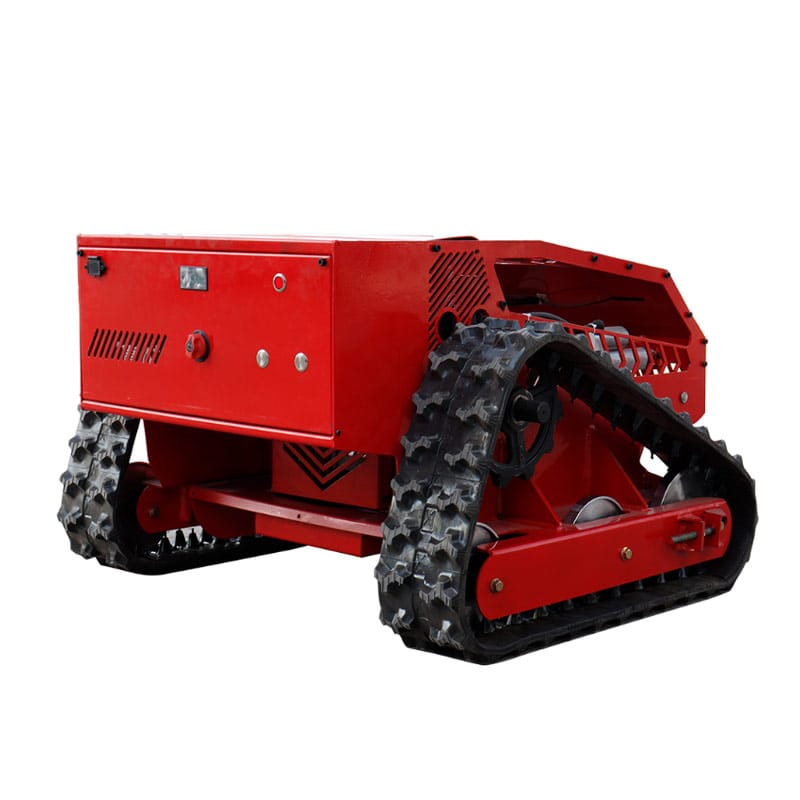
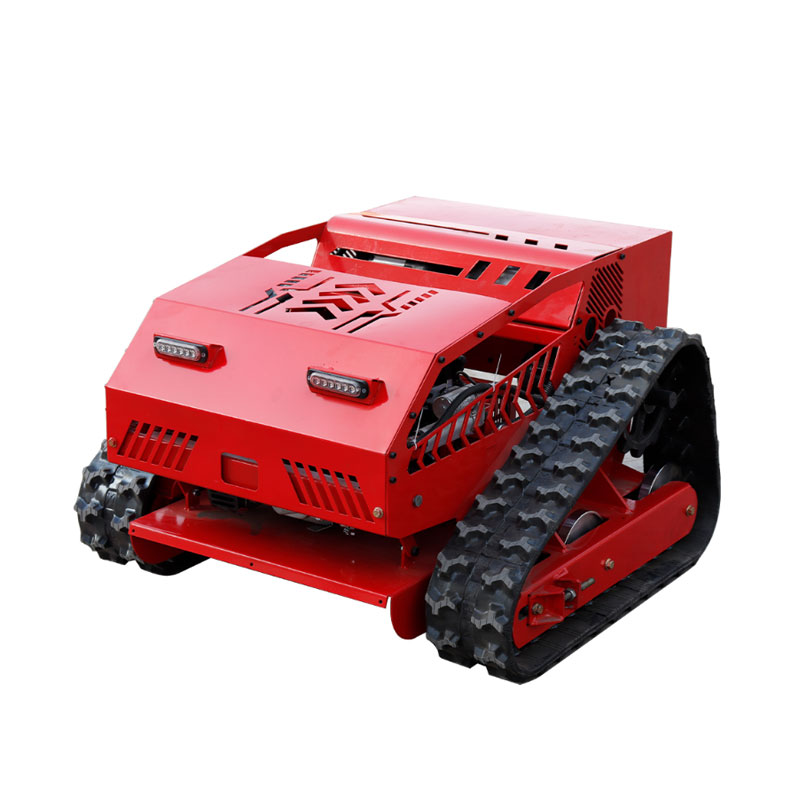
Review the Luyue remote control lawn mower range and the LY-800T crawler mower as starting points. Send the completed specification sheet rather than asking for an orchard remote control mower from a single photograph.
Comparison Table
| Method | Best Fit | Strength | Limitation to Check |
|---|---|---|---|
| Orchard remote control mower | Slopes, low canopy, rough lanes, and confined blocks | Operator controls from outside the machine | Requires line of sight, training, and route assessment |
| Ride-on mower | Wider, firm, open orchard lanes | Fast travel where an orchard remote control mower is not required | Operator exposure and canopy clearance |
| Compact tractor with mower | Broad rows and multi-purpose farm work | Uses an existing power unit | Turning space, soil compaction, and slope suitability |
| Walk-behind mower | Small blocks and targeted areas | Simple access in narrow places | Operator fatigue and slower coverage |
| String trimmer or brush cutter | Tree bases and detailed obstacle work | Precise spot treatment | Labor intensity over large areas |
Questions for the Supplier
- What orchard remote control mower width and height should be used for the measured clearances?
- Which vegetation and stem sizes are within the cutting system’s intended use?
- How do wet grass, side slopes, and loose soil change the operating recommendation?
- What is the correct response to loss of signal or stalled cutting components?
- Which guards, emergency controls, and daily inspection points should operators check?
- What spare blades, belts, filters, or track parts are recommended for the first season?
- Can the supplier review a field-trial video and help adjust the operating method?
FAQ
Can a remote control mower work between orchard rows?
Yes. An orchard remote control mower can work between rows when width, height, turning space, vegetation, slope, and obstacles match the model. Measure the narrowest real clearance and test a representative row before purchase.
Will tracks damage orchard soil?
Tracks may distribute contact, but sharp turns and wet ground can still disturb soil or create ruts. Evaluate the actual surface during a trial and adjust the route or timing.
Can it mow directly around tree trunks?
It can work near trees when clearance is controlled, but young trunks, graft unions, roots, guards, irrigation, and fallen debris need protection. Detailed trimming may require another tool.
How should buyers evaluate slope capability?
Measure the site, review the manufacturer’s limit, and test on representative ground with trained personnel. Wet vegetation, loose soil, cross-slope travel, and poor visibility can reduce the safe working range.
What should be sent with a mower inquiry?
Send row and clearance measurements, slope readings, vegetation photos, obstacle notes, required cutting height, operating frequency, transport details, and destination country.
Conclusion
Choosing an orchard remote control mower is a site-design exercise. Row geometry, canopy, vegetation, terrain, operator visibility, and seasonal workflow matter more than a single headline specification. A measured field trial shows whether the machine will reduce difficult mowing without creating new tree, soil, or safety problems.
For a model recommendation, send your orchard map, row measurements, slope photos, vegetation details, and working schedule through the Luyue Machinery contact page. That information gives the team a practical basis for matching an orchard remote control mower to the site.