
Table of Contents
Direct Answer
Mobile crusher maintenance is a planned inspection routine covering the feed system, crushing chamber, discharge conveyor, tracks, power unit, hydraulics, electrical controls, guards, and emergency devices. The most useful routine combines a pre-start walkaround, observations during production, a controlled shutdown check, and scheduled service based on the manufacturer’s manual.
Good mobile crusher maintenance does not begin when a warning light appears. It begins with clean feed, a stable site, the correct operating settings, and a shift record that makes small changes visible before they become downtime. Operators should never enter a hazardous area, remove a guard, or clear a blockage until the machine is stopped, isolated, and handled under the site’s approved procedure.
Why Maintenance Starts With the Work Plan
Mobile crusher maintenance and production are connected. Oversize feed, tramp metal, wet fines, uneven loading, and a blocked discharge area all place avoidable stress on the machine. A mobile crusher maintenance plan therefore needs to include the material and site workflow, not only lubrication and replacement parts.
The UK Health and Safety Executive notes in its guidance on safe operation of mobile jaw crushers that blockages may result from overfeeding, oversize material, foreign objects, or accumulated fines. Those causes are operational signals. If they repeat, mobile crusher maintenance should address the loading method and feed preparation instead of treating every stoppage as an isolated event.
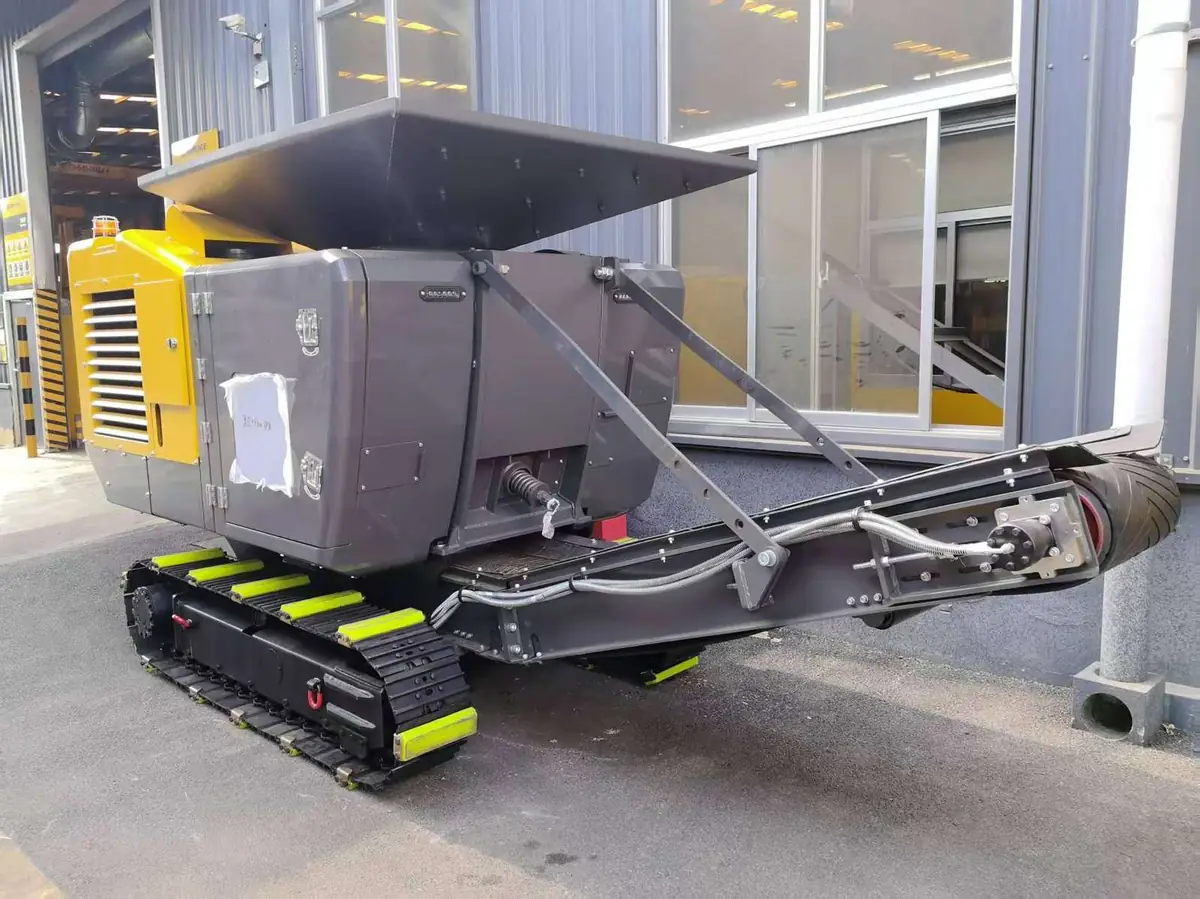
For model selection and service discussions, review the Luyue LY30 and LY50 mobile jaw crusher page. The exact mobile crusher maintenance intervals must always follow the manual supplied for the selected machine, its engine or power system, and its operating environment.
Pre-Start Walkaround
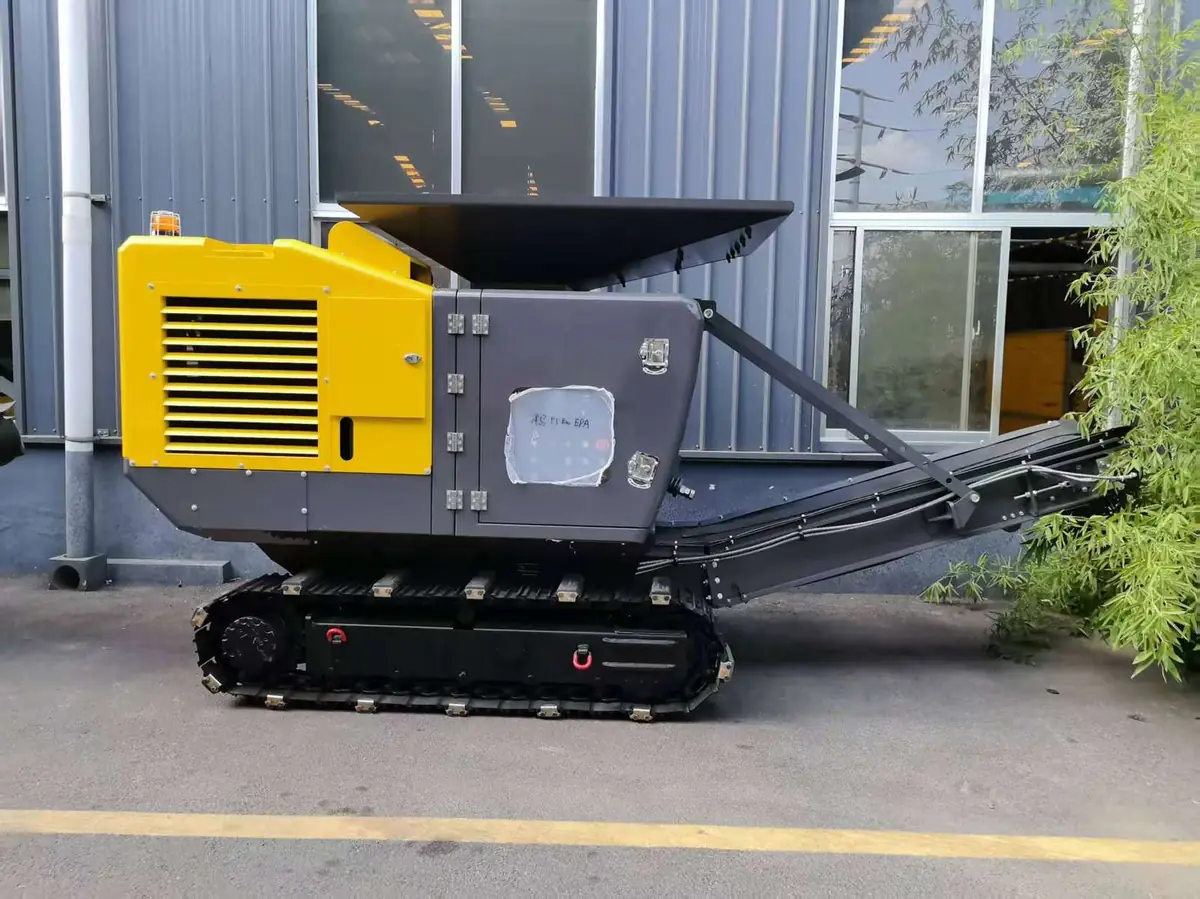
A mobile crusher maintenance walkaround should follow the same route each shift so that no zone is skipped. Begin outside the machine and look for fresh leaks, damaged hoses, loose fasteners, displaced guards, material buildup, and objects near the tracks or conveyor. Check that access steps and inspection points are clean enough to use safely.
The operator should compare today’s condition with the previous shift log. A stain that appears new, a belt that has moved toward one edge, or a hose that has begun rubbing against steel is more useful than a general note saying that the machine looks normal. Mobile crusher maintenance improves when observations are specific and repeatable.
- Confirm that guards, covers, handrails, and emergency-stop devices are present and visibly undamaged.
- Look beneath the machine for oil, fuel, coolant, or hydraulic fluid that was not present at shutdown.
- Inspect cable routing, hose supports, clamps, and abrasion points before the machine moves.
- Clear loose stone and waste from access areas without entering an unsafe zone.
- Check fluid levels and lubrication points using the model-specific manual.
- Review unresolved defects and verify that safety-critical items were closed before startup.
Feeder and Hopper Checks
The feeder is a core mobile crusher maintenance zone because it controls how shock loads reach the jaw. Examine liners, feeder bars, springs or mounts, fasteners, and visible wiring. Remove material left in places where it can restrict movement or hide a defect. Do not stand beneath suspended material or reach into the feed path.
During loading, watch whether the excavator presents material evenly. Repeatedly dropping large pieces onto one side can produce uneven loading and may accelerate wear. Mobile crusher maintenance should include feedback to the loader operator because feed presentation is one of the easiest production variables to correct.
| Observation | Possible Meaning | Action Before Production |
|---|---|---|
| Feeder does not move freely | Packed fines, obstruction, damaged mount, or drive issue | Stop and inspect under the approved isolation procedure |
| Frequent oversize at hopper | Poor upstream preparation | Resize material and brief the loader operator |
| Material feeds in surges | Inconsistent bucket loading or feeder setting | Stabilize the loading rhythm |
| Fresh liner movement | Loose or worn fastening point | Escalate before continued feeding |
| Mud and wet fines accumulate | Restricted flow and possible bridging | Improve sorting and cleaning plan |
Jaw Chamber and Wear Parts
The jaw chamber is the central mobile crusher maintenance area where feed condition, crusher setting, and wear meet. With the machine safely isolated, inspect accessible jaw plate surfaces, cheek plates, fastening points, and the discharge opening according to the manual. Look for uneven wear, cracks, loose components, and packed material.
Do not judge wear from operating hours alone. Abrasive stone, reinforced concrete, contaminated feed, and an unnecessarily tight setting can change the wear pattern. A better mobile crusher maintenance record pairs hours with material type, setting, and output observations. Photographs taken from the same safe inspection position can help the team compare changes over time.
The jaw crusher output size guide explains why the crusher setting and downstream screening plan need to be considered together. If output becomes coarser without an intentional adjustment, inspect wear and setting before assuming the feed has changed.
Conveyor and Discharge Area
Conveyor inspection is a visible part of mobile crusher maintenance. Check for belt damage, mistracking, loose material around pulleys, worn skirting, damaged rollers, and restricted clearance beneath the belt. The output stockpile must not rise into the discharge path. A conveyor problem often develops gradually, so note changes in belt position and material spillage during every shift.
Mobile crusher maintenance should also cover magnets or metal-removal equipment where fitted. Verify that collected metal can be removed under a controlled procedure and that it does not fall back into the product pile. Reinforcement steel left in crushed material can create handling problems downstream.
Tracks, Hydraulics, and Power Unit
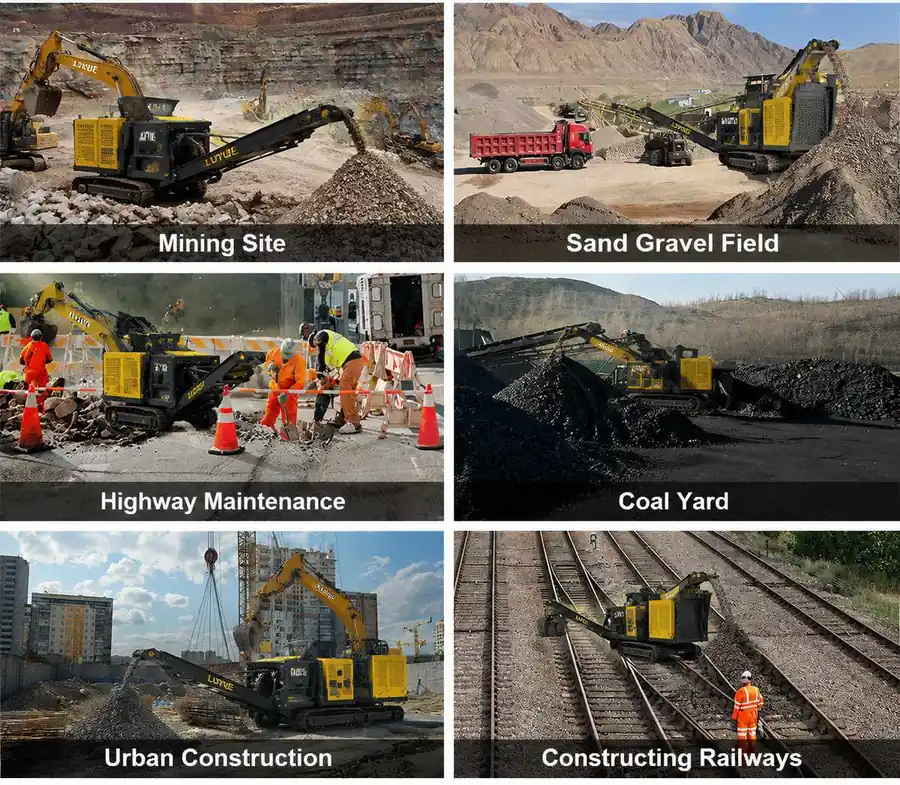
Crawler tracks need a defined place in mobile crusher maintenance before travel. Inspect for trapped stone, damaged track components, leaks around travel motors, and conditions that could affect tension. Move the machine only on a prepared route within the operating instructions. Never use travel as a quick test when people or equipment remain in the exclusion zone.
Hydraulic inspection should focus on leakage, abrasion, damaged fittings, abnormal cylinder movement, and temperature or pressure warnings shown by the control system. Never use a hand to search for a high-pressure leak. Mobile crusher maintenance must follow the manufacturer’s safe method for depressurizing and repairing the system.
Power-unit mobile crusher maintenance includes the specified fluids, filters, cooling surfaces, connections, and warning history. Dust can reduce cooling performance, while a blocked filter can change engine behavior. Service intervals vary by model and duty, so record actual hours and follow the correct schedule rather than using an interval copied from another machine.
Checks During Production
Mobile crusher maintenance continues during production through observation from the designated safe position. New vibration, rhythmic knocking, belt squeal, repeated overload warnings, unusual smoke, rising temperature, or changing discharge flow deserves attention. The goal is not to diagnose every fault while the machine runs; it is to recognize a change and stop safely before damage grows.
A stable feed level generally supports consistent crushing. Running nearly empty and then receiving a large bucket can produce irregular loading. Mobile crusher maintenance works best when the loading operator and crusher operator communicate about feed size, contamination, and warning trends throughout the shift.
Dust behavior is another useful signal. More dust may reflect drier feed, damaged suppression equipment, poor spray placement, or excessive fines. When crushing concrete, brick, or silica-containing rock, dust control is both an operating issue and an occupational health issue. Follow the site risk assessment and applicable exposure-control rules.
Safe Shutdown and Isolation
The shutdown step in mobile crusher maintenance should allow feed to stop and material to clear in the sequence specified by the manual. Stopping a loaded chamber can make the next startup difficult and may create a hazardous blockage. After shutdown, isolate energy sources before cleaning inside guarded areas or working near components that could move.
HSE guidance on maintenance of work equipment emphasizes regular maintenance and use of manufacturer instructions, particularly for safety-critical features. A mobile crusher maintenance procedure should identify who may isolate the machine, how isolation is verified, and how the equipment is returned to service.
Blockage clearing is not an extension of normal loading. It requires a separate safe method based on the machine design and the site assessment. Never improvise with a person on the crusher platform while feed equipment remains active.
Daily, Weekly, and Condition-Based Tasks
| Frequency | Typical Scope | Decision Rule |
|---|---|---|
| Each shift | Walkaround, leaks, guards, feeder, belt tracking, tracks, controls, fluid levels | Correct safety-critical defects before startup |
| During operation | Sound, vibration, temperatures, warnings, feed behavior, discharge flow | Stop safely when a new abnormal condition appears |
| After shutdown | Spillage, wear observations, cleaning, defect log, hours | Record what changed during the shift |
| Weekly planning | Fasteners, wear trend, hoses, rollers, filters, lubrication schedule | Use the manual and service history |
| Condition-based | Jaw plates, belt repair, hose replacement, setting verification | Act on measured wear or a verified defect |
This mobile crusher maintenance table is a planning framework, not a substitute for the machine manual. The model-specific schedule may require tasks at different hour intervals. Mobile crusher maintenance should be stricter in abrasive, dusty, wet, or high-utilization work because the operating conditions increase inspection demands.
Troubleshooting Signals
Mobile crusher maintenance uses repeated symptoms as patterns. A hot bearing area, recurring belt drift, slow hydraulic response, frequent jaw blockage, and a sudden change in output size can each have several causes. Record the conditions, stop under the correct procedure, and involve a qualified technician when the cause is not clear.
| Signal | Questions to Ask | Do Not Do |
|---|---|---|
| Frequent chamber blockage | Is feed oversized, wet, contaminated, or presented too quickly? | Do not reach into the chamber or work under suspended material |
| Belt tracks to one side | Is buildup present, a roller damaged, or loading off-center? | Do not adjust near a moving belt |
| Output becomes coarser | Has the setting changed or have wear parts deteriorated? | Do not tighten the setting without measuring and checking the manual |
| Hydraulic temperature rises | Is the oil level correct and is cooling restricted? | Do not open a pressurized system |
| New vibration or knocking | Did feed condition change or is a component loose? | Do not continue simply to finish the pile |
Maintenance Records and Spare Parts
A short mobile crusher maintenance log is more useful than a detailed form that operators rarely complete. Record date, hours, material, setting, inspected zones, defect, action, responsible person, and closure status. Attach a photo when location or wear is difficult to describe.
Mobile crusher maintenance spare parts planning should start with normal wear and service items, then consider the site’s distance from support and the consequence of downtime. Mobile crusher maintenance commonly depends on filters, belts, rollers, hoses, seals, lubricants, jaw wear parts, and approved fasteners, but the correct list must come from the selected model.
When evaluating a supplier, use the jaw crusher supplier evaluation guide to ask about manuals, parts identification, remote troubleshooting, operator training, and service communication. A well-organized mobile crusher maintenance plan needs accurate part numbers and a clear escalation path.
Supplier Questions
- Which mobile crusher maintenance inspections are required before each shift, and which tasks require trained service personnel?
- What are the model-specific lubrication points and service intervals?
- How should jaw wear be measured and documented?
- Which warning codes require immediate shutdown?
- What first-service parts should be ordered with the machine?
- How are electrical, hydraulic, and control diagrams supplied?
- What photographs or operating data should be sent for remote diagnosis?
Comparison Table
| Approach | What It Looks Like | Likely Result |
|---|---|---|
| Reactive repair | Mobile crusher maintenance begins only after a fault stops production | Longer downtime and uncertain parts demand |
| Calendar-only service | Tasks are done by date without checking duty | May miss condition changes or service too early |
| Hour-based service | Manufacturer intervals are tracked accurately | Reliable baseline for routine service |
| Condition-based inspection | Wear, temperature, vibration, and defects are trended | Earlier intervention when a component changes |
| Integrated mobile crusher maintenance | Feed control, inspections, records, parts, and training work together | More predictable operation and clearer decisions |
FAQ
What should a daily mobile crusher maintenance checklist include?
A daily mobile crusher maintenance checklist should include guards, leaks, feeder condition, jaw area, conveyor tracking, tracks, hoses, fluid levels, controls, emergency devices, housekeeping, and unresolved defects. Use the model manual to add required points.
How often should jaw plates be inspected?
Inspect them at the interval specified by the manufacturer and more often when feed is abrasive or wear changes quickly. Record wear position and material type instead of relying only on operating hours.
Why does a mobile jaw crusher keep blocking?
Common contributors include oversize feed, wet fines, tramp material, uneven presentation, excessive feed rate, and restricted discharge. Stop and isolate the machine before investigating a blockage.
Can operators perform all maintenance tasks?
No. Mobile crusher maintenance tasks must match operator authorization and training. Electrical, hydraulic, guarding, and internal crusher work may require qualified service personnel and formal isolation.
What information helps a supplier diagnose a problem?
Provide the model and serial information, operating hours, material, crusher setting, warning code, symptom timeline, recent maintenance, and clear photos or video taken from a safe position.
Conclusion
Effective mobile crusher maintenance combines disciplined inspection with good feeding, safe isolation, accurate records, and model-specific service instructions. The purpose is to detect change early, protect people, and make production more predictable.
To discuss a maintenance-ready mobile jaw crusher configuration, send your material photos, expected feed size, output requirement, working hours, and destination country through the Luyue Machinery contact page. The team can match the inquiry to the relevant model and provide the correct service documentation.