
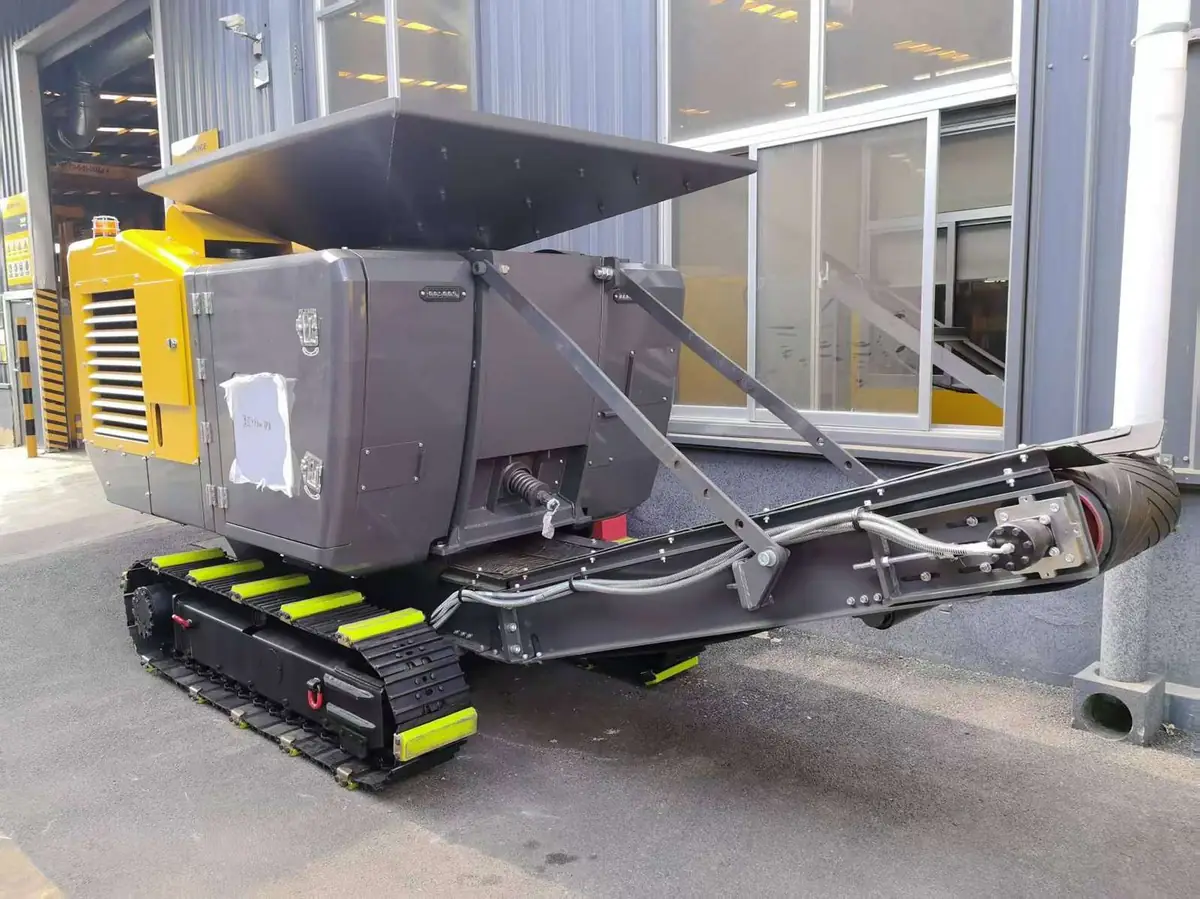
Mini Crusher Size Guide: How to Choose the Right Machine for Daily Material Volume
Choosing the right compact crusher becomes easier when the mini crusher size guide starts from jobsite reality. This guide explains how contractors can connect feed size, daily volume, mobility, and output targets before asking for a quotation.
Table of Contents
Define the Job Before Choosing Machine Size
A useful mini crusher size guide starts with the work, not the machine catalog. Contractors often ask what size crusher they need after seeing several compact models online, but the right answer depends on daily material volume, feed shape, access limits, output target, crew experience, and how the crushed material will be reused.
The goal of a mini crusher size guide is to help buyers avoid two common errors. The first is choosing a machine that is too small for the feed material, creating constant pre-breaking and low production. The second is choosing a machine that is too large for the jobsite, transport plan, or budget discipline. Both mistakes can reduce return on investment.
For Luyue buyers, a practical mini crusher size guide should include site photos, estimated material volume, common feed dimensions, desired discharge size, loading equipment, and local support expectations. With that information, the supplier can recommend a compact jaw crusher that fits the job instead of simply quoting the nearest available model.
Match Feed Opening to Real Material Dimensions
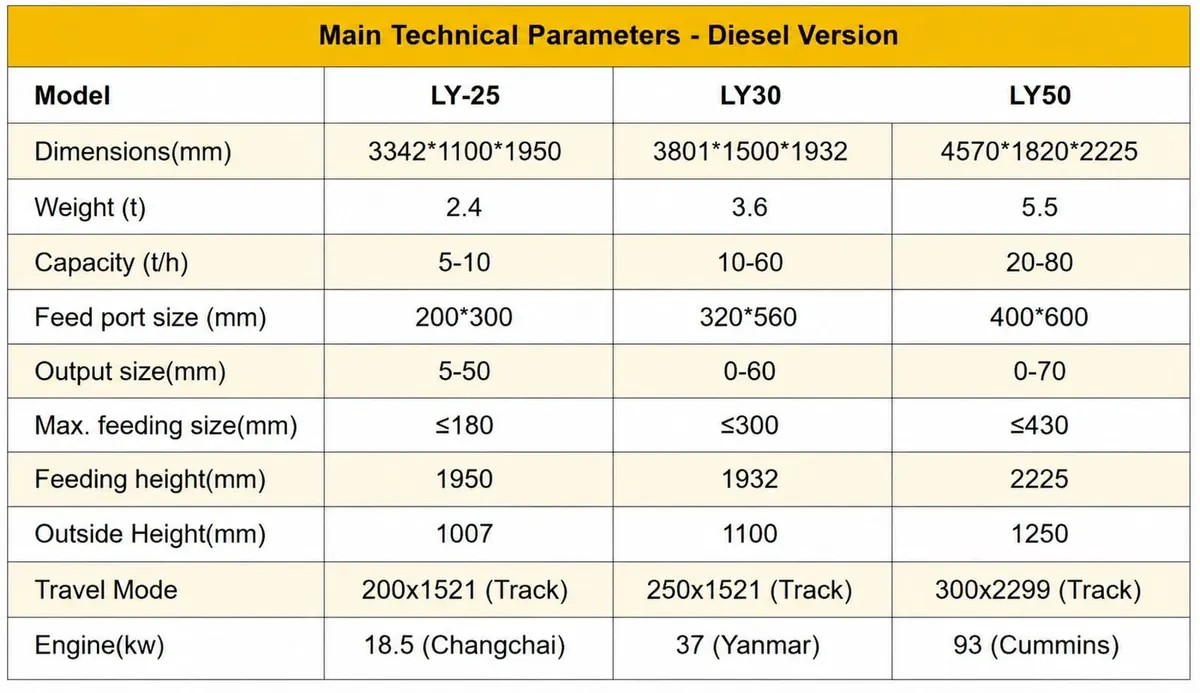
Feed opening is the first technical checkpoint in any mini crusher size guide. The jaw must accept the common material size without forcing the operator to stop constantly. A machine that can only accept the smallest pieces from the pile may still crush well, but the crew will spend too much time preparing material.
Measure the longest and thickest pieces separately. A concrete chunk may pass by thickness but jam because of length. Natural stone may be irregular and difficult to orient. A proper mini crusher size guide considers how the material will actually enter the hopper, not only whether one measured edge looks acceptable.
- Measure at least ten representative pieces from the pile before finalizing the machine size.
- Separate normal feed size from occasional oversize material in your notes.
- Photograph long slabs, foundation pieces, and reinforced sections from multiple angles.
- Ask whether the recommended crusher can accept the common size comfortably, not barely.
Connect Daily Volume to Productive Crushing Hours
Daily volume is the second checkpoint in a mini crusher size guide. Buyers often describe total project volume, but the machine must be selected around daily workload. A contractor crushing a small batch after demolition has different needs from a recycler handling material every day.
Convert your project into productive crushing hours. If the crew works eight hours, some time will go to sorting, loading, moving equipment, checking wear parts, managing dust, and clearing the discharge area. A good mini crusher size guide calculates the output requirement against the hours when the jaw is actually crushing.
The Luyue article on crusher capacity planning explains why real output is shaped by material flow and jobsite organization. Use that logic together with this mini crusher size guide when comparing compact jaw crusher models.
Consider Mobility Weight and Site Access
Machine size also includes transport weight, crawler movement, turning space, loading height, and discharge layout. A mini crusher size guide should ask where the crusher will work, how often it will move, and whether the site has soft ground, tight gates, steep access, or limited staging space.
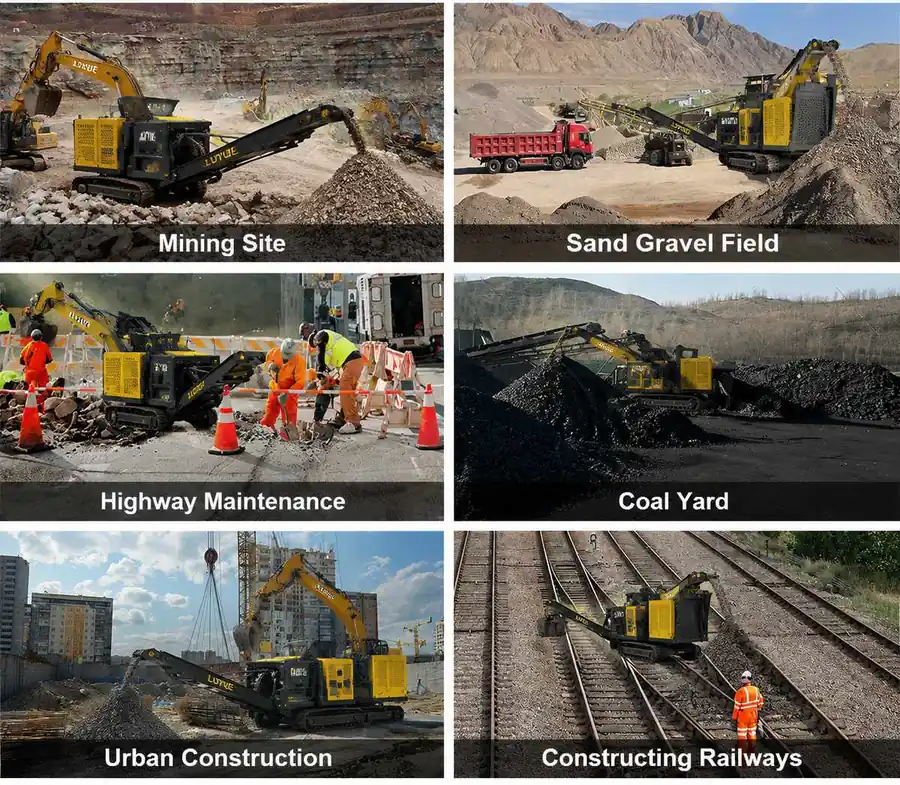
Crawler mobility can be valuable when material piles are spread across a site. Moving the crusher closer to the pile reduces loader travel and keeps feeding more consistent. In that situation, the correct mini crusher size guide may favor a tracked compact jaw crusher even when the crushing chamber is not the only deciding factor.
If the crusher will travel between small jobs, transport dimensions and setup time deserve careful attention. A machine that is easy to relocate may create more usable weekly production than a larger machine that is awkward to move.
Plan Output Size and Downstream Screening
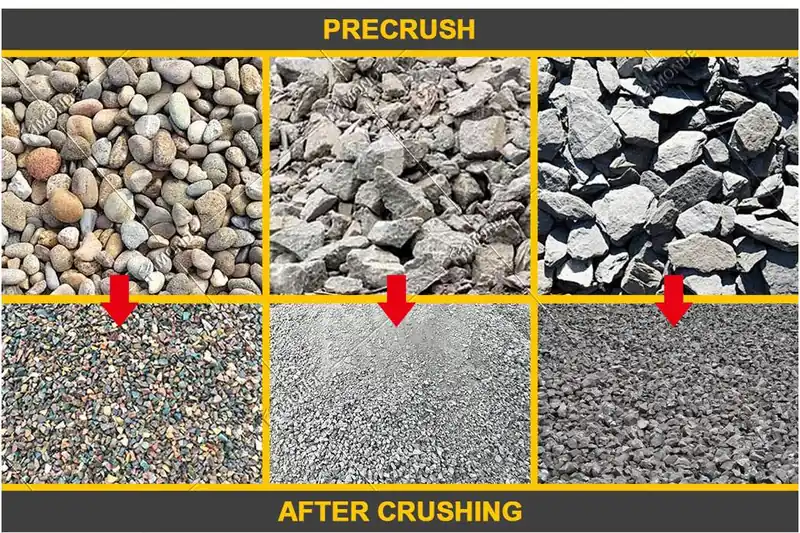
Output size shapes the whole mini crusher size guide. A buyer producing coarse backfill material may prioritize throughput, while a buyer preparing a tighter aggregate size may need a different jaw setting and possible screening after primary crushing. The machine should be selected around the required product, not only around feed acceptance.
When the output must be consistent, discuss whether a screen, secondary processing step, or careful jaw setting is required. A compact jaw crusher is a primary reduction machine, so a realistic mini crusher size guide should avoid promising perfect grading from jaw crushing alone.
For more detail, review Luyue’s jaw crusher output size guide before discussing the final configuration with the sales team.
Compare Compact Crusher Configurations
A good mini crusher size guide compares configurations through real jobsite priorities. Some buyers need the smallest practical machine for urban projects. Others need a stronger compact crusher for concrete recycling, stone preparation, or rental fleet use. The decision should balance feed opening, jaw force, mobility, output control, and support.
| Configuration point | What it affects | Buyer question |
|---|---|---|
| Compact tracked jaw crusher | Mobility and jobsite placement | Will moving closer to material reduce loading time? |
| Larger feed opening | Acceptance of common chunks | How much pre-breaking can the crew realistically do? |
| Adjustable discharge setting | Output size and production rate | What size does the reused material need to be? |
| Accessible wear parts | Maintenance time and uptime | Can the operator inspect jaws and belts easily? |
| Supplier technical support | Startup confidence | Will the supplier review my material and workflow before purchase? |
Use a Sizing Table Before Contacting Suppliers
The table below turns the mini crusher size guide into a procurement conversation. It does not replace supplier engineering, but it helps buyers prepare the information a supplier needs to make a responsible recommendation.
| Planning input | Smallest acceptable answer | Better buying note |
|---|---|---|
| Material type | Concrete or rock | Clean concrete, reinforced concrete, brick, asphalt, limestone, or mixed mineral waste |
| Feed size | Maximum piece size | Common piece size, oversize percentage, and shape problems |
| Daily volume | Total tons or cubic meters | Material per day and productive crushing hours per shift |
| Output target | Small aggregate | Exact intended reuse, acceptable size range, and screening needs |
| Site access | Open or tight site | Gate width, surface condition, slope, staging area, and discharge space |
| Service plan | Need spare parts | Wear part availability, operator training, and maintenance access expectations |
Check Maintenance Access and Wear Parts
Maintenance should not be treated as a separate issue after the mini crusher size guide is complete. A compact crusher that is easier to inspect, clean, and service can deliver more reliable output over time. Check jaw plate access, belt inspection points, lubrication needs, and guarding before selecting a model.
Wear parts depend on material abrasiveness, feed preparation, jaw setting, and operator habits. A practical mini crusher size guide asks how the buyer will stock common parts and how quickly the supplier can support the machine. This is especially important for remote jobsites and buyers building a rental fleet.
Safety planning belongs in the same discussion. Concrete and stone crushing can create dust exposure concerns, so buyers should review local rules and resources such as OSHA’s page on crystalline silica in construction when designing site procedures.
Build a Clear Inquiry for Luyue
A clear inquiry makes the mini crusher size guide much more accurate. Instead of asking for the biggest or cheapest mini crusher, send the supplier a short technical brief. Include project type, material photos, common feed dimensions, daily volume target, output use, site access, and whether the machine must be exported or supported in a specific region.
Luyue can use those details to compare the LY30 and LY50 mobile jaw crusher options and explain which configuration fits the application. Buyers can also review the crawler jaw crusher category to understand how tracked machines fit concrete recycling and small aggregate jobs.
If supplier comparison is part of the decision, use Luyue’s jaw crusher supplier evaluation checklist to check documentation, communication, service response, and parts support alongside technical sizing.
Common Mistakes to Avoid
The most expensive mistake in a mini crusher size guide is focusing only on headline capacity. A compact crusher with a strong advertised number can still disappoint if the feed pieces are too large, the discharge area is too tight, or the output target requires extra screening. The second mistake is ignoring the operator’s daily routine.
- Do not choose only by the maximum feed opening without checking common material shape.
- Do not plan production from eight full hours if sorting and movement consume part of the day.
- Do not request very fine output without discussing how it affects throughput and wear.
- Do not ignore transport limits if the crusher must move between many small jobs.
- Do not compare suppliers without checking support quality and spare parts planning.
A final mini crusher size guide review should also include who will operate the crusher. Experienced operators usually notice feed bridging, belt tracking, unusual vibration, and discharge buildup earlier than a new crew. If the buyer is building a first crushing workflow, supplier training and clear startup guidance may matter as much as a slightly larger crushing chamber.
Project location can change the correct mini crusher size guide as well. A rural yard with open space may support a larger material stockpile and wider discharge area, while an urban renovation site may require a compact tracked unit that moves through tight access points. Buyers should describe these physical limits before asking for a model recommendation.
The best mini crusher size guide is therefore a working plan, not a single answer. When feed size, daily workload, output use, mobility, and service expectations are described together, the supplier can explain tradeoffs clearly and the buyer can compare machines with less guesswork.
For export buyers, the mini crusher size guide should also mention documentation, packing expectations, operator language needs, and spare parts for the first service period. These details do not change the crushing principle, but they can change how quickly the machine becomes productive after it reaches the jobsite.
Photos of the loading path, discharge area, and largest feed pieces make the mini crusher size guide more accurate before any deposit or production schedule is discussed.
Frequently Asked Questions
What is the first step in a mini crusher size guide?
The first step in a mini crusher size guide is defining the material, common feed size, daily volume target, desired output size, and site access conditions.
Does a larger jaw opening always mean a better mini crusher size guide?
A larger jaw opening can help with bigger feed pieces, but a better mini crusher size guide also considers mobility, loading equipment, discharge space, wear parts, and support.
How does daily material volume affect a mini crusher size guide?
Daily material volume shows how much crushing must happen during productive hours. The mini crusher size guide should match real daily workload, not only the total project volume.
Can one mini crusher size guide apply to both concrete and rock?
One mini crusher size guide can cover both, but concrete, reinforced concrete, limestone, and hard rock should be evaluated separately because material behavior and wear can differ.
What should I send Luyue for a mini crusher size guide?
Send material photos, feed measurements, target output, daily volume, site layout, loading equipment, and support expectations so Luyue can recommend a suitable compact jaw crusher.
Request a Sizing Recommendation
If you are not sure which compact jaw crusher fits your project, send Luyue your material details and operating plan. The team can turn this mini crusher size guide into a practical machine recommendation and quotation discussion through the contact page.