
Table of Contents
Introduction
Compact equipment plays a critical role in modern construction, landscaping, agriculture, and municipal maintenance. Among the most commonly compared machines are the compact track loader and the skid steer loader.
Although these machines appear similar in size and function, they perform differently depending on terrain conditions, workload requirements, and operating environments.
For contractors and equipment buyers, choosing the right machine affects:
- job site efficiency
- ground performance
- attachment capability
- operating stability
- long-term productivity
Understanding the practical differences between compact track loaders and skid steer loaders helps operators select equipment that matches real working conditions.
Understanding the Difference: Compact Track Loader vs Skid Steer Loader
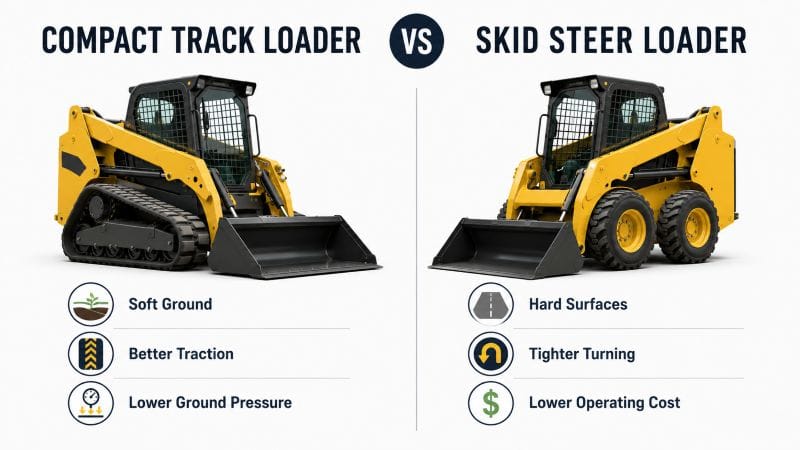
A skid steer loader typically uses wheels, while a compact track loader operates on rubber tracks.
Both machines support similar attachment systems and can perform tasks such as:
- loading materials
- grading surfaces
- site cleanup
- attachment-based operations
However, the undercarriage design creates major differences in traction, stability, flotation, and surface impact.
Why Ground Conditions Matter
Ground conditions are often the deciding factor when choosing between a compact track loader and a skid steer loader.
On hard and stable surfaces, wheeled skid steer loaders usually move faster and operate more efficiently. On soft, muddy, or uneven terrain, compact track loaders provide better traction and stability.
| Ground Condition | Better Choice | Reason |
|---|---|---|
| Concrete or pavement | Skid steer loader | Faster movement and lower rolling resistance |
| Muddy terrain | Compact track loader | Better flotation and traction |
| Loose soil | Compact track loader | Reduced ground pressure |
| Dry construction site | Skid steer loader | Efficient travel speed |
| Sloped terrain | Compact track loader | Improved stability |
The more difficult the terrain becomes, the more valuable the track system becomes.
Compact Track Loaders on Soft Ground
Compact track loaders are designed for environments where wheel slip and ground pressure become operational problems.
The rubber track system distributes machine weight across a larger contact area. This improves flotation and reduces the chance of sinking into soft soil.
Because of this, compact track loaders are commonly used in:
- landscaping projects
- agricultural properties
- wet construction sites
- forestry operations
- uneven terrain applications
In these environments, traction often matters more than travel speed.
Skid Steer Loaders on Hard Surfaces
Skid steer loaders are highly effective on hard and stable surfaces.
On paved areas, compacted soil, and urban construction sites, wheeled machines typically move faster and create less friction during turning.
This makes skid steer loaders practical for:
- urban construction
- warehouse yards
- pavement work
- municipal maintenance
- material transport applications
Their faster travel speed also improves efficiency when operators frequently move between work zones.
Maneuverability in Tight Spaces
Both compact track loaders and skid steer loaders are designed for confined job sites, but wheeled skid steer loaders often feel more agile on stable surfaces.
Because they experience less ground resistance, skid steer loaders can turn quickly and reposition efficiently in narrow working environments.
Compact track loaders still perform well in tight spaces, but their heavier undercarriage design can create additional resistance during aggressive turning.
For highly compact urban environments, wheeled skid steer loaders are often preferred.
Comparing Surface Impact
Surface protection is important in landscaping, turf work, and finished property development.
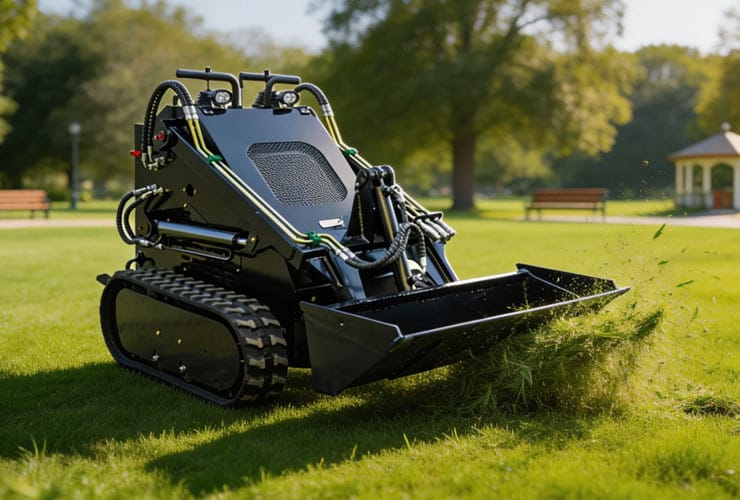
Compact track loaders distribute weight more evenly, helping reduce surface pressure and minimizing rutting on softer ground.
This makes them a better option for:
- newly prepared landscaping areas
- soft lawns
- wet soil conditions
- golf course maintenance
- sensitive terrain projects
Skid steer loaders may create more surface disturbance under soft conditions because wheel pressure is concentrated in smaller contact areas.
Attachment Compatibility and Versatility
One reason both machines remain popular is their attachment flexibility.
Most compact track loaders and skid steer loaders support:
| Attachment | Typical Use |
|---|---|
| Bucket | Material loading and transport |
| Grapple | Brush and debris handling |
| Auger | Drilling holes |
| Pallet fork | Material movement |
| Trencher | Utility installation |
| Grading attachment | Surface leveling |
Because attachment systems are often similar, the main difference usually comes down to how the machine performs in specific terrain conditions.
Construction Applications
In construction environments, the right machine depends on the site itself.
Skid steer loaders are commonly used on:
- paved urban sites
- compacted commercial projects
- concrete-heavy environments
Compact track loaders are more effective on:
- unfinished terrain
- muddy job sites
- early-stage site preparation areas
Contractors often select equipment based on seasonal weather conditions as well.
Landscaping and Property Development
Landscaping contractors frequently prefer compact track loaders because they create less ground disturbance while maintaining strong traction.
On projects involving soft soil, slopes, or newly prepared surfaces, tracks help maintain stability without damaging the work area excessively.
Skid steer loaders still remain useful for hardscape work and material transport where surface conditions are stable.
Agricultural Applications
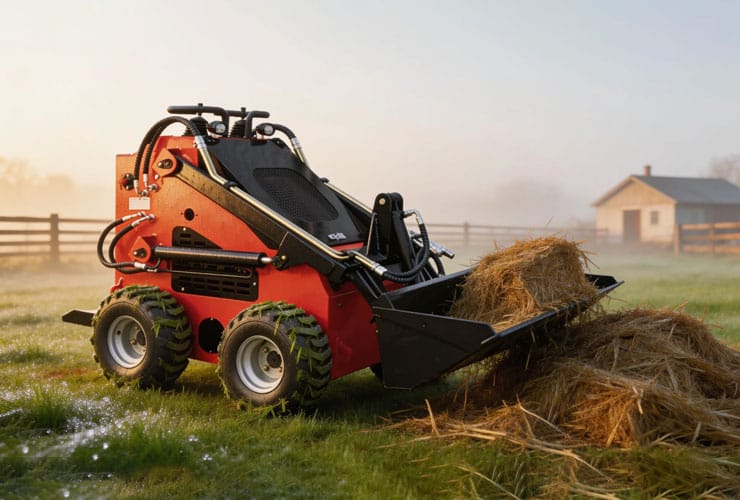
Agricultural environments often involve mud, uneven terrain, and seasonal ground instability.
Compact track loaders perform especially well under these conditions because the track system improves flotation and traction.
They are commonly used for:
- property maintenance
- feed area access
- bulk material handling
- farm infrastructure projects
Wheeled skid steer loaders may still perform effectively in dry farm environments with stable surfaces.
Operating Comfort and Stability
Compact track loaders typically provide a smoother ride on rough terrain because tracks absorb more vibration.
This improves operator comfort during longer work cycles and helps maintain machine stability on uneven surfaces.
Skid steer loaders are usually more responsive and agile on stable ground but may feel rougher on heavily uneven terrain.
Maintenance Considerations
Maintenance requirements also differ between the two machines.
| Machine Type | Main Maintenance Focus |
|---|---|
| Skid steer loader | Tires, wheel systems |
| Compact track loader | Track system, rollers, undercarriage |
Track systems generally require more undercarriage maintenance, especially in abrasive environments.
However, they also provide operational advantages that may outweigh the additional maintenance requirements depending on the application.
Which Machine Is Better?
There is no universal answer because each machine is designed for different working conditions.
A skid steer loader is usually the better choice when:
- the surface is stable
- travel speed matters
- maneuverability is the priority
A compact track loader is usually the better option when:
- traction is critical
- ground conditions are soft
- slopes or uneven terrain are involved
The best choice depends on the environment where the machine will operate most often.
How Luyue Machinery Product Lines Fit Different Applications
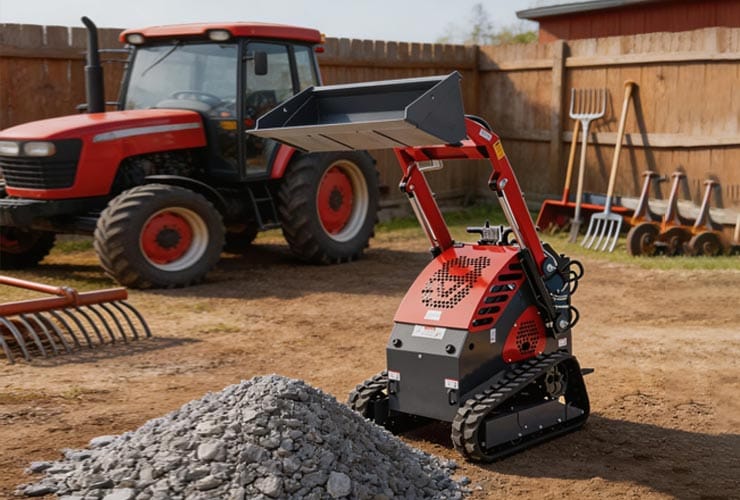
Luyue Machinery offers compact equipment solutions that align with different job site conditions, including skid steer loaders, mini tracked excavators, remote control lawn mowers, and excavator accessories. This type of product combination is useful for contractors who require compact machines for excavation, material handling, slope maintenance, and landscaping applications from a single supplier source. (luyuemachinery.com)
For buyers managing mixed terrain conditions, combining skid steer loaders with mini tracked excavators can improve operational flexibility across multiple project types.
Conclusion
Compact track loaders and skid steer loaders are both valuable compact machines, but they are optimized for different environments.
Key takeaways:
- Compact track loaders perform better on soft or uneven terrain
- Skid steer loaders are faster on hard and stable surfaces
- Both machines support similar attachment systems
- Ground conditions should guide equipment selection
- The right machine improves productivity and workflow efficiency
Choosing equipment based on real operating conditions helps contractors maximize performance while reducing unnecessary limitations on the job site.
FAQ
What is the main difference between a compact track loader and a skid steer loader?
The main difference is the undercarriage system. Compact track loaders use rubber tracks, while skid steer loaders typically use wheels.
Which machine is better for muddy terrain?
Compact track loaders perform better on muddy or soft ground because tracks provide improved traction and flotation.
Are skid steer loaders faster than compact track loaders?
Yes. Skid steer loaders usually travel faster on hard and stable surfaces.
Which machine causes less ground damage?
Compact track loaders generally create less ground pressure and are better for sensitive surfaces.
Can both machines use the same attachments?
In many cases, yes. Both machines often support similar attachment systems such as buckets, grapples, augers, and grading tools.