
Table of Contents
Direct Answer
A remote control mower for steep slopes is useful when vegetation must be maintained on steep, uneven, or hard-to-access terrain while the operator stays at a safer distance from the machine. It is most relevant for embankments, roadsides, reservoirs, orchards, solar farms, municipal slopes, and rough landscape areas where conventional mowing exposes operators to unnecessary risk.
A good remote control mower for steep slopes decision starts with terrain assessment, not only machine power. Buyers should check slope angle, ground firmness, vegetation height, track grip, cutting width, remote control range, transport access, and maintenance support before choosing a model.
A useful quotation for a remote control mower for steep slopes should explain the recommended machine, slope assumptions, cutter type, operating distance, spare parts, and delivery support. That makes comparison easier for contractors, municipalities, and dealers.
Introduction
Maintaining vegetation on steep slopes is a different job from mowing a flat lawn. Operators may face rollover risk, slipping, hidden obstacles, unstable soil, flying debris, and difficult rescue access. A remote control mower for steep slopes changes the working method by allowing the operator to guide the mower remotely from a more stable position.
OSHA’s guidance on riding mower rollovers notes that slope limits and terrain conditions must be taken seriously. OSHA also lists mowing as part of landscaping work with hazards such as cuts, eye injury, hearing loss, ergonomics, and vehicle accidents. Those references support the practical value of reducing direct operator exposure in difficult terrain: OSHA riding mower safety and OSHA landscaping hazards.
This guide explains how to evaluate a remote control mower for steep slopes for commercial landscaping, municipal maintenance, agricultural operations, and contractor use.
When This Machine Makes Sense
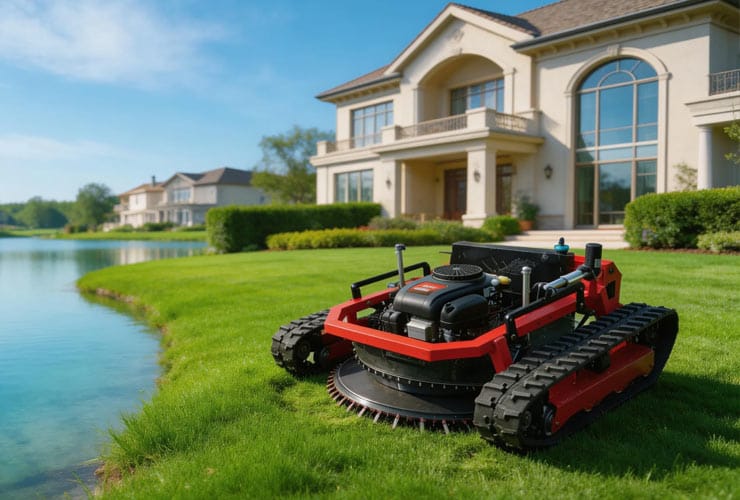
A remote control mower for steep slopes makes sense when the area is too risky, too narrow, too uneven, or too tiring for ordinary ride-on or walk-behind mowing. It is not only a convenience purchase. In many projects, it is a way to make the work method more controlled.
| Application | Why Remote Control Helps | Planning Note |
|---|---|---|
| Roadside embankments | Operator can stand away from traffic-facing slopes | Plan visibility, traffic control, and safe standing position |
| Reservoir and river banks | Crawler traction helps on uneven vegetation | Avoid unstable edges and wet ground where traction is uncertain |
| Solar farm vegetation | Remote operation helps around panels and narrow rows | Confirm cutting height and turning space |
| Orchards and farms | Useful around trees, ditches, and irregular rows | Check branch clearance and transport route |
| Municipal slope maintenance | Helps crews handle repeated difficult areas | Standardize inspection and cleaning routines |
Terrain and Slope Assessment
Before selecting a remote control mower for steep slopes, document the steepest section, average slope, ground surface, soil moisture, obstacles, and access route. Photos alone may not show whether the machine can work safely, so buyers should also describe the terrain after rain and during normal maintenance periods.
A remote control mower for steep slopes should be matched to real working conditions. Loose soil, deep ruts, rocks, drainage channels, retaining walls, and hidden debris can change the risk level even when the slope looks manageable from a distance.
- Measure or estimate slope angle where possible.
- Check whether grass hides holes, rocks, pipes, or drop-offs.
- Confirm where the operator can stand with a clear view.
- Plan how the mower will enter, turn, and leave the work area.
- Avoid using slope claims as a substitute for site assessment.
Cutting Requirements
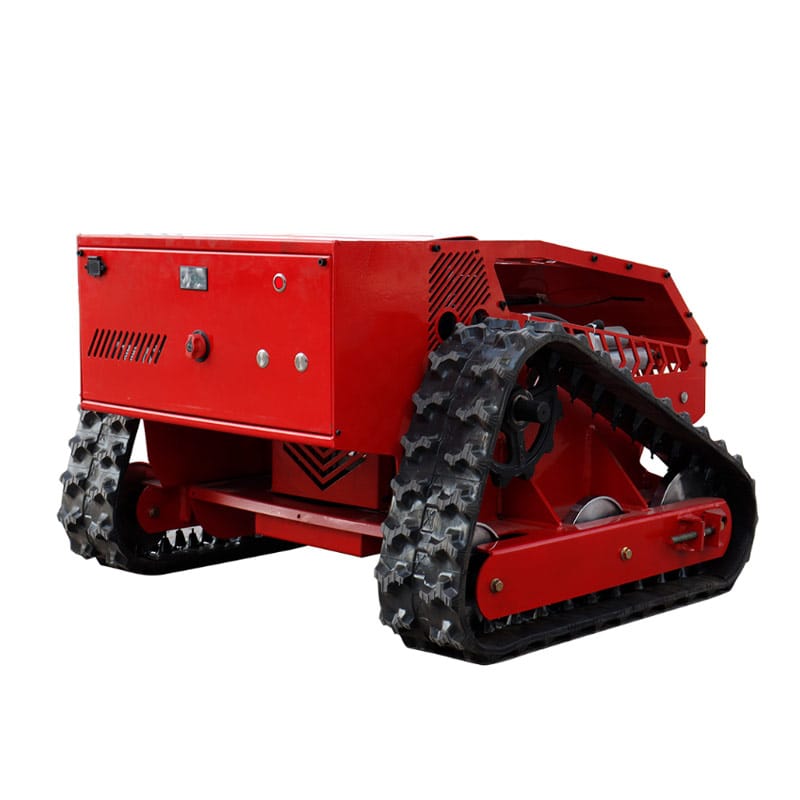
The best remote control mower for steep slopes depends on what must be cut. Tall weeds, ordinary grass, brushy growth, young saplings, and dense roadside vegetation may require different cutting power, deck design, blade routine, and maintenance intervals.
Buyers should define cutting height, vegetation density, working width, expected finish quality, and seasonal frequency. A remote control mower for steep slopes used for rough slope clearance may not need the same finish as a mower used around a public park or facility entrance.
| Cutting Question | Why It Matters |
|---|---|
| How tall is the vegetation at the start of the job? | Tall vegetation affects power demand and travel speed |
| Is the growth grass, weeds, brush, or mixed material? | Different vegetation affects blade wear and finish quality |
| How often will the area be maintained? | Frequent mowing usually needs less aggressive cutting |
| Is finish quality important? | Public areas may require a cleaner result than rough maintenance zones |
| Are stones or debris common? | Debris affects safety planning and inspection routine |
Safety Planning
A remote control mower for steep slopes can reduce direct operator exposure, but it still requires a safety plan. The operator should maintain visibility, keep bystanders away, avoid unstable edges, and stop work when traction or communication becomes uncertain.
Remote operation does not remove the need for training. Crews should understand startup checks, emergency stop behavior, slope limits, obstacle response, blade safety, battery or fuel routine, and transport procedures.
Model Selection Factors
When comparing a remote control mower for steep slopes, buyers should review track design, machine width, cutting width, engine or motor power, remote control distance, ground clearance, service access, and spare part availability. The right specification depends on the work area, not on one headline feature.
For Luyue models, buyers can start with the LY-800T crawler remote control lawn mower and then confirm whether the model fits slope access, vegetation type, and transport requirements.
Workflow and Maintenance
Daily workflow should include site inspection, machine inspection, planned mowing direction, operator position, bystander control, blade check, cleaning, and post-work review. A remote control mower for steep slopes performs better when these steps become routine.
Maintenance should not be left until failure. Check blades, belts or drive components, tracks, guards, fasteners, remote control response, fuel or battery systems, and cleaning points according to supplier guidance.
Acceptance Test Before Full Operation
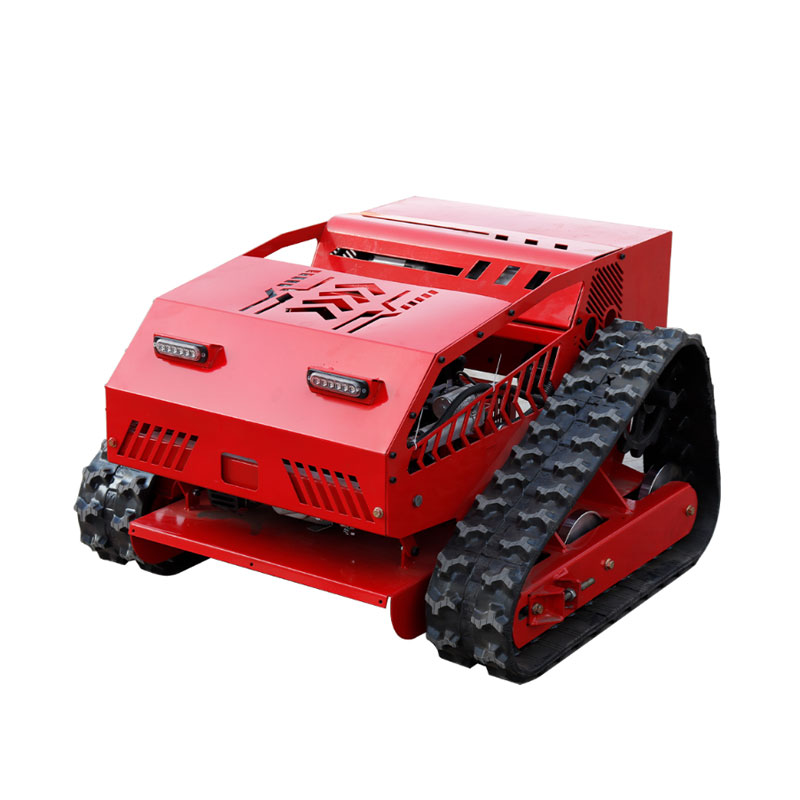
Before putting a remote control mower for steep slopes into regular service, run a controlled acceptance test on a small section of representative terrain. This test should include starting, stopping, turning, climbing, descending, cutting, emergency stop response, and post-work inspection.
The first test should not begin on the most difficult slope. Start with a manageable area, confirm operator visibility, then move gradually toward the terrain that reflects the real job. Record whether the mower tracks straight, whether the blades leave the expected finish, and whether vegetation density slows the machine more than expected.
A practical acceptance test helps the buyer confirm whether the remote control mower for steep slopes fits the work before crews rely on it for a full route. It also gives the supplier useful feedback if adjustment, training, or spare parts guidance is needed.
| Test Item | What to Observe |
|---|---|
| Remote response | Controls should respond predictably without delay or signal loss |
| Slope movement | The machine should climb and descend without unstable sliding |
| Cutting result | Vegetation should be reduced to the expected finish for the job |
| Operator position | The operator should keep clear visibility from a safer location |
| Post-work inspection | Blades, tracks, guards, and fasteners should be checked after the test |
Common Buying Mistakes
The first mistake is buying a remote control mower for steep slopes only because a slope rating looks attractive. Slope work depends on ground condition, vegetation density, moisture, obstacles, operator visibility, and safe access. A responsible buyer checks the complete work area before trusting one number.
The second mistake is ignoring transport and storage. A remote control mower for steep slopes must be moved to the slope, unloaded safely, cleaned after work, and stored where tracks, blades, controls, and batteries or fuel systems can be inspected. Those practical details affect daily use.
The third mistake is skipping operator training. Even though the operator is remote, the machine still uses cutting blades and works around people, property, and uneven ground. Training should cover emergency stop, bystander distance, slope judgment, and inspection routine.
Questions to Ask the Supplier
A supplier should explain why a specific remote control mower for steep slopes fits your slope, vegetation, working width, and access route. If the recommendation is based only on a model name, the buyer does not have enough information to make a confident decision.
Ask what terrain photos are needed, what spare parts should be ordered first, how operators should clean the mower after tall vegetation, and what conditions should stop operation. These answers are part of the real value of a remote control mower for steep slopes supplier.
- What slope and ground conditions did you assume for this recommendation?
- Which vegetation types are suitable for this cutting deck and blade setup?
- What daily inspection points should the operator check?
- Which parts should be stocked for the first season of work?
Buyer Checklist
- Send slope photos and videos before asking for a remote control mower for steep slopes quote.
- Share vegetation type, cutting height, and seasonal maintenance frequency.
- Describe access route, transport vehicle, and storage conditions.
- Ask which spare parts should be stocked for the first operating period.
- Confirm training needs for operators and maintenance staff.
- Review safety procedures for bystanders, traffic, and unstable edges.
Comparison Table
| Option | Best Fit | Main Advantage | Main Limitation |
|---|---|---|---|
| remote control mower for steep slopes | Steep slopes, embankments, rough terrain, and difficult access | Operator can work from a safer remote position | Requires terrain assessment, visibility, and training |
| Ride-on mower | Large flatter areas with stable ground | Fast coverage on suitable terrain | Rollover risk increases on unsafe slopes |
| Walk-behind brush cutter | Small areas and narrow access points | Lower purchase complexity | Operator remains directly exposed to slope fatigue and debris |
| Manual clearing crew | Spot work around obstacles | Flexible around small objects | Slow and labor intensive for large slopes |
Why Choose Luyue Machinery
Luyue Machinery supplies compact construction and maintenance equipment for contractors, municipal crews, landscaping teams, agricultural users, and dealers. For a remote control mower for steep slopes, Luyue can discuss slope conditions, vegetation type, model selection, spare parts, and shipping.
To request a recommendation, send site photos, slope details, vegetation information, required cutting width, and destination country through the Luyue contact page.
FAQ
What is a remote control mower for steep slopes used for?
A remote control mower for steep slopes is used to cut vegetation on steep slopes, embankments, roadsides, orchards, solar farms, reservoirs, and rough terrain while the operator controls the machine remotely.
Is a remote control mower for steep slopes safer than a ride-on mower?
It can reduce direct operator exposure on difficult terrain, but safe use still depends on slope assessment, visibility, training, bystander control, and proper maintenance.
What site information should I send before buying?
Send slope photos, videos, vegetation height, terrain condition, access route, operating frequency, and any obstacles or unstable edges.
Can it cut brush as well as grass?
That depends on the model, blade system, vegetation density, and cutting height. Share vegetation details before choosing the mower.
What is the biggest buying mistake?
The biggest mistake is choosing by slope claim alone. A remote control mower for steep slopes should be matched to terrain, vegetation, operator visibility, transport, and service support.
Conclusion
A remote control mower for steep slopes is most valuable when slope maintenance requires a safer and more controlled work method. Evaluate terrain, vegetation, access, training, and maintenance before choosing a model.
Before placing an order, confirm that the remote control mower for steep slopes can reach the work area, cut the actual vegetation, operate within the crew’s safety plan, and be maintained by the people who will use it. That final check turns the purchase from a product choice into a workable maintenance solution.