
Introduction
For many construction companies, transporting demolition waste has always been considered a normal part of every project. Concrete, bricks, and stone are loaded onto trucks, transported to a recycling facility or landfill, and then replaced with newly purchased aggregate delivered back to the construction site.
Although this process has been common for decades, it is becoming increasingly expensive. Rising fuel prices, higher labor costs, stricter environmental regulations, and increasing landfill fees are forcing contractors to rethink how construction waste should be managed.
Instead of treating demolition waste as something that must be removed, more companies across Europe are now viewing it as a valuable resource. By crushing concrete, bricks, and natural stone directly on the job site, contractors can produce recycled aggregate that is immediately ready for reuse.
This simple change in workflow can significantly reduce transportation costs, shorten project timelines, and improve overall profitability.
The True Cost of Transporting Construction Waste
Many contractors only consider the transportation bill when calculating waste disposal costs. In reality, transporting construction waste creates several hidden expenses that are often overlooked.
Every truck leaving the job site requires fuel, a driver, maintenance, insurance, and loading equipment. In addition, businesses must often pay landfill charges or recycling fees before purchasing new aggregate for the next stage of construction.
This means companies are paying twice.
First, they pay to remove usable material.
Then they pay again to buy replacement material.
Over the course of a year, these repeated costs can have a significant impact on overall project profitability.
Why On-Site Crushing Makes Better Business Sense
On-site crushing eliminates unnecessary transportation by processing construction waste where it is generated.
Instead of sending concrete and bricks away, contractors can recycle them immediately into usable aggregate for backfilling, road bases, temporary access roads, landscaping projects, or other construction applications.
This creates several important advantages.
Lower Transportation Costs
Fewer truck movements mean lower fuel consumption, reduced labor costs, and less equipment wear.
Reduced Disposal Fees
Because more material is reused, less waste is transported to landfill or external recycling facilities.
Faster Project Completion
Materials remain on site, reducing waiting time for deliveries and improving construction efficiency.
Better Resource Utilization
Concrete, bricks, and natural stone become valuable construction materials instead of expensive waste.
Which Materials Can Be Recycled?
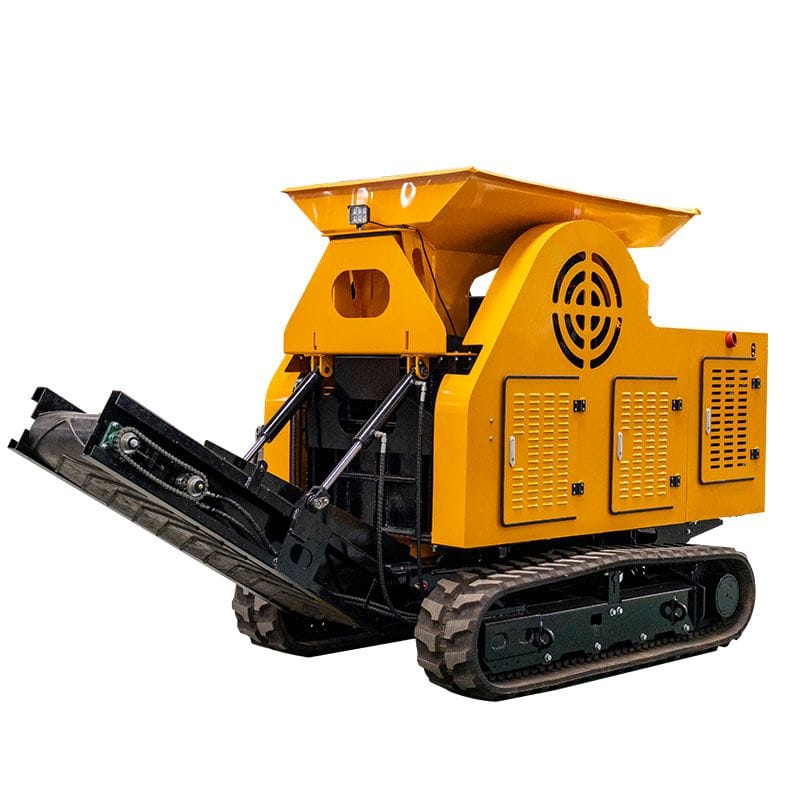
Compact mobile jaw crushers are suitable for processing many common construction materials, including:
Concrete
Bricks
Natural stone
Masonry
Construction waste
Stone factory offcuts
However, reinforced steel, metal, and other metallic materials should always be removed before crushing to protect the machine and ensure stable performance.
Industries That Benefit Most
On-site crushing is suitable for a wide range of industries.
Demolition contractors reduce transportation costs while completing projects more efficiently.
Road maintenance companies can recycle removed concrete directly into road base materials.
Municipal engineering projects benefit from lower waste disposal costs and improved sustainability.
Stone processing plants can recycle offcuts into usable aggregate instead of paying for disposal.
Equipment rental companies also benefit because compact crushers are increasingly requested by contractors looking for flexible recycling solutions.
Environmental Benefits
In addition to reducing costs, on-site crushing supports sustainable construction practices.
Recycling existing materials reduces the need for virgin aggregate extraction, lowers carbon emissions associated with transportation, and decreases the amount of construction waste sent to landfill.
These advantages help contractors meet environmental requirements while improving their corporate image and supporting the circular economy.
Choosing the Right Equipment
Before investing in a compact mobile jaw crusher, contractors should evaluate several factors.
Consider the primary material you process, expected production volume, available working space, transportation requirements, and long-term operating costs.
Choosing equipment that matches your actual business needs is usually more profitable than simply purchasing the largest or least expensive machine available.
Frequently Asked Questions
Is on-site crushing suitable for small construction companies?
Yes. Compact mobile jaw crushers are widely used by small and medium-sized contractors because they are easy to transport and suitable for a variety of projects.
Can recycled concrete be reused?
Yes. Recycled concrete is commonly used for road bases, backfilling, and many other construction applications.
Is on-site crushing environmentally friendly?
Yes. It reduces transportation, decreases landfill waste, and supports sustainable construction practices.
What materials should not be crushed?
Metal, reinforced steel, and other metallic materials should be removed before crushing.
Conclusion
As construction costs continue to rise across Europe, improving efficiency has become more important than ever. On-site crushing provides contractors with a practical way to reduce transportation expenses, minimize waste disposal costs, and maximize the value of materials already available on the job site.
Instead of viewing construction waste as a problem, successful businesses increasingly recognize it as an opportunity to reduce costs, improve sustainability, and strengthen long-term profitability. Investing in the right compact mobile jaw crusher is not simply purchasing equipment—it is investing in a more efficient and competitive way of working.