
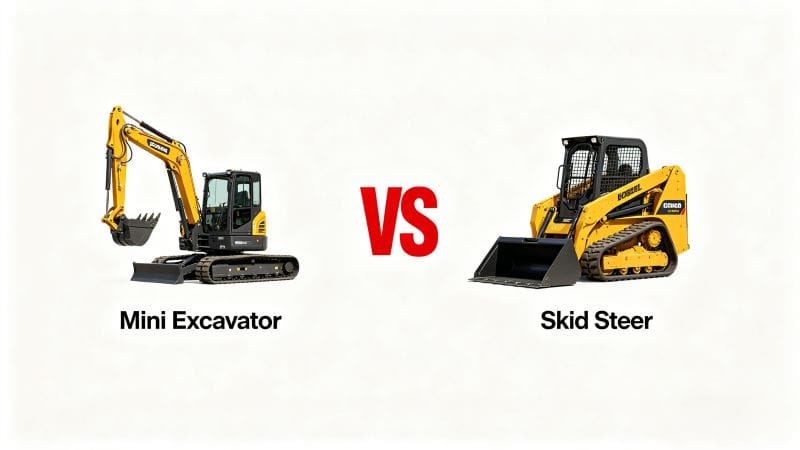
When selecting compact construction equipment for your next project, two of the most commonly compared machines are the mini excavator and the skid steer loader. Both are widely used across construction, landscaping, agriculture, and municipal work, yet they serve fundamentally different operational purposes. Making the right choice between these machines is crucial because it directly impacts productivity, efficiency, and overall job site cost-effectiveness.
While both machines offer impressive versatility, their strengths differ significantly. Understanding these differences ensures you select the right equipment for each specific application, ultimately saving time and money on your projects.
Table of Contents
What Is a Mini Excavator?
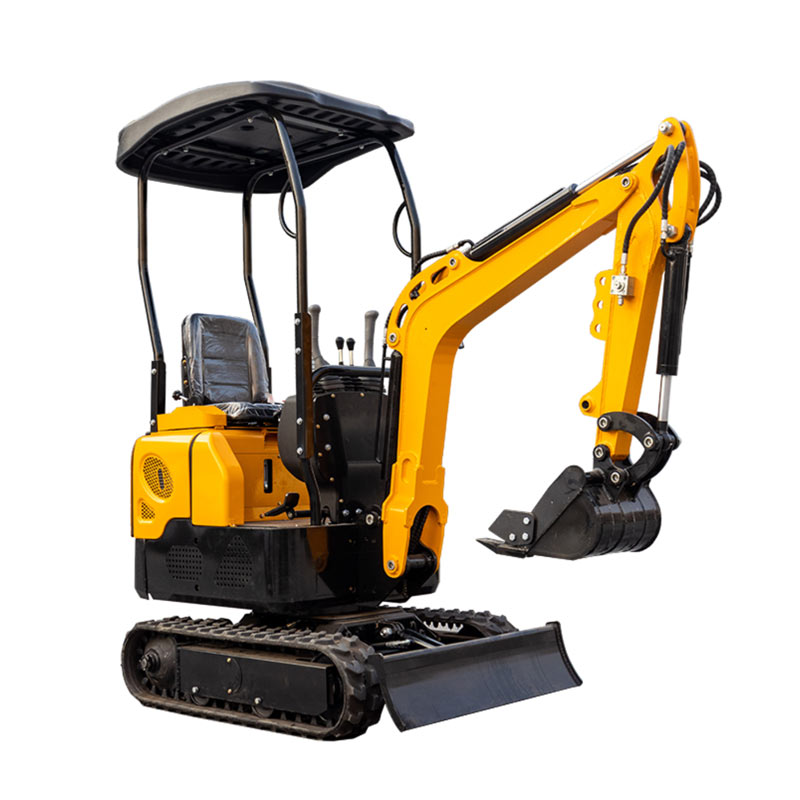
A mini excavator is a compact tracked machine designed primarily for excavation tasks. This powerful piece of equipment uses a hydraulic boom, arm, and bucket system to dig soil, trenches, and foundations with remarkable precision. The key strength of a mini excavator lies in its ability to combine precise digging capabilities with exceptional stability.
One of the most distinctive features of a mini excavator is its rotating upper structure, which allows the machine to operate efficiently without constantly repositioning the tracks. This 360-degree rotation capability makes it particularly effective in confined spaces where maneuvering room is limited.
Typical applications include:
- Trenching for utilities
- Foundation excavation
- Landscaping work
- Drainage installation
- Light demolition projects
Mini excavators perform best when digging accuracy and ground stability are paramount. Their tracked undercarriage provides excellent traction on soft or uneven terrain, making them reliable partners in challenging ground conditions.
What Is a Skid Steer Loader?
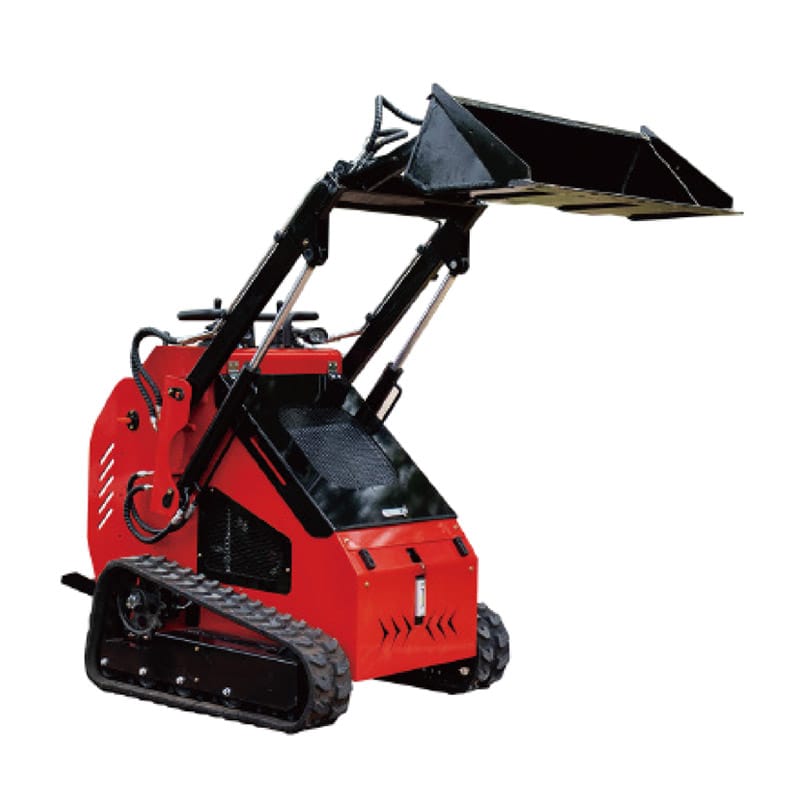
A skid steer loader is a compact, wheeled or tracked machine designed primarily for material handling, loading, and surface preparation tasks. Unlike mini excavators, skid steer loaders use lift arms mounted on the sides of the machine and operate through skid steering, which allows them to turn within their own footprint.
This unique steering mechanism gives skid steers exceptional maneuverability, making them ideal for job sites where space is limited but frequent movement is required. The ability to quickly change direction and navigate tight spaces sets skid steers apart from other compact equipment.
Typical applications include:
- Material transport across job sites
- Site cleanup operations
- Grading and leveling surfaces
- Snow removal in winter months
- Loading trucks and other vehicles
Skid steer loaders are optimized for speed and flexibility rather than deep excavation work. Their design prioritizes quick, repeated movements that maximize productivity in material handling scenarios.
Key Differences Between Mini Excavator and Skid Steer Loader
Understanding the fundamental differences between these two machines is essential for making an informed equipment selection. Each machine is engineered for specific operational strengths, and recognizing these distinctions helps contractors match the right tool to the right job.
Primary Working Function
The mini excavator’s primary function centers on digging and trenching operations. Its hydraulic system delivers precise control for excavation tasks, allowing operators to achieve accurate depths and clean trench walls. In contrast, the skid steer loader excels at material handling and loading applications, with its lift arm system designed for efficient lifting, carrying, and dumping operations.
Movement and Mobility System
Mini excavators rely on tracked systems that provide excellent stability and traction across various ground conditions. The tracked design distributes weight evenly, reducing ground pressure and preventing the machine from sinking in soft soil. Skid steer loaders offer flexibility with either wheeled or tracked options, with wheeled versions providing faster travel speeds on hard surfaces and tracked versions offering better performance on loose or muddy terrain.
Digging and Lifting Capability
When it comes to digging ability, mini excavators clearly outperform skid steers. The excavator’s boom and arm configuration provides extended reach and superior digging force, enabling operators to dig deeper trenches and more precise foundations. Skid steers can perform light digging with appropriate attachments, but they cannot match the precision and depth capability of a dedicated excavator.
For lifting operations, skid steers demonstrate greater efficiency. Their vertical lift path allows for efficient loading into trucks and elevated dumping positions. Mini excavators can lift materials, but their lifting capacity is secondary to their primary digging function.
Job Site Suitability
Mini excavators excel in projects requiring stationary operation with precise movements. Their ability to rotate the upper structure while the tracks remain stationary makes them ideal for trenching along roadsides, working in narrow spaces, and operating in areas where frequent repositioning would be inefficient.
Skid steers thrive in dynamic job site environments where frequent movement is necessary. Their compact footprint and skid steering capability allow them to navigate crowded construction sites, move between work zones quickly, and operate in spaces where traditional equipment cannot fit.
When to Choose a Mini Excavator
Mini excavators are the preferred choice when precision digging is the primary requirement. Understanding the specific scenarios where excavators excel helps contractors make better equipment decisions.
Utility Trenching
For water pipes, electrical conduits, and drainage systems where precision depth is critical, mini excavators deliver unmatched performance. The ability to control dig depth with accuracy ensures utility lines are installed at correct elevations, reducing the risk of future maintenance issues.
Foundation Work
Residential and small commercial building foundations require precise excavation to ensure structural integrity. Mini excavators provide the control needed to achieve proper foundation dimensions while maintaining clean, stable trench walls.
Landscaping Projects
From shaping land contours to digging ponds and installing trees, mini excavators offer the finesse required for detailed landscaping work. The combination of digging power and precision control makes them invaluable for creating professional-grade outdoor spaces.
Confined Job Sites
The rotating arm design allows mini excavators to operate efficiently in tight or complex environments where other equipment would struggle. This capability makes them essential for urban construction projects and renovation work in developed areas.
When to Choose a Skid Steer Loader
Skid steer loaders are better suited for material movement and surface work applications where speed and flexibility provide the greatest value.
Material Handling
Moving soil, gravel, sand, or construction materials around job sites is where skid steers truly shine. Their efficient lift system and maneuverability allow operators to transport materials quickly between locations, reducing project timelines and labor costs.
Site Preparation
Grading and leveling land before construction begins requires equipment that can move quickly across the site while maintaining consistent surface quality. Skid steers equipped with grading attachments deliver the performance needed for efficient site preparation.
Cleanup Work
Removing debris and clearing construction sites efficiently is a natural fit for skid steer loaders. Their ability to quickly scoop, carry, and dump materials accelerates cleanup operations and helps maintain organized, safe job sites.
High-Mobility Tasks
Projects requiring frequent movement between work zones demand equipment with speed and flexibility. Skid steers excel in these scenarios, allowing operators to transition between tasks without significant downtime.
Attachment Flexibility Comparison
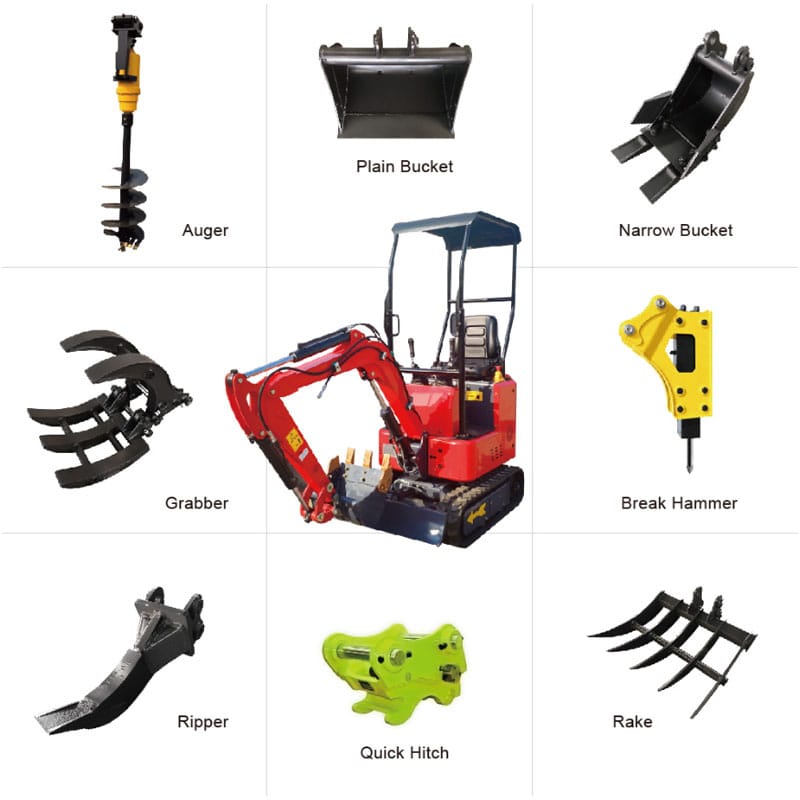
Both machines support various attachments, but their attachment ecosystems serve different operational focuses. Understanding attachment compatibility helps maximize equipment versatility.
Mini excavators offer strong compatibility with digging-focused attachments, including different bucket types, augers, and hydraulic breakers. These attachments expand the excavator’s capabilities while maintaining focus on excavation and earth-moving tasks.
Skid steer loaders generally provide more flexibility for material handling attachments. The wider range of compatible attachments, including pallet forks, trenchers, and specialized grapples, makes skid steers adaptable to diverse job site requirements.
Common Attachment Options:
- Buckets: Both machines support various bucket configurations
- Augers: Available for both, ideal for post-hole digging
- Hydraulic Breakers: Compatible with both machines for demolition work
- Grapples: Useful for both machines in material handling applications
- Trenchers: Better compatibility with skid steers
- Pallet Forks: More common on skid steers
Job Site Efficiency Comparison
Efficiency depends critically on matching machine type to specific task requirements. Using the wrong equipment for a job creates inefficiencies that impact project timelines and budgets.
Mini excavators increase efficiency in:
- Digging operations requiring precision
- Trenching accuracy and depth control
- Controlled excavation work in confined spaces
- Operations requiring stationary positioning
Skid steer loaders increase efficiency in:
- Material movement and transport
- Surface grading and leveling operations
- Fast job site operations requiring mobility
- Multi-task scenarios with frequent repositioning
Combined Use Strategy
On larger job sites, mini excavators and skid steer loaders often work as complementary team members. This combined approach maximizes the strengths of each machine while minimizing individual limitations.
Example Workflow:
- Mini excavator performs digging and trenching operations with precision
- Skid steer loader removes excavated materials and transports them to designated locations
- Skid steer handles site cleanup while excavator completes detailed work
- Both machines coordinate to maintain continuous workflow
This combination reduces downtime between operations and improves overall project speed. Many successful contractors leverage both machines to deliver projects on time and within budget.
Operational Considerations
Before selecting a machine for your project, several critical factors warrant careful consideration:
Type of Work
Evaluate whether your project primarily involves digging or material handling. This fundamental question guides the initial equipment selection process.
Ground Conditions
Assess the terrain where the equipment will operate. Soft soil conditions favor mini excavators with their tracked undercarriage, while stable surfaces accommodate either machine type.
Job Site Size and Access Limitations
Consider the available working space and access points. Confined spaces may require the compact footprint of a skid steer or the stationary operation capability of a mini excavator.
Required Attachments
Identify which attachments are necessary for your project tasks and verify compatibility with your equipment options.
Workflow Structure
Analyze how different operations flow together on your job site. Equipment selection should support efficient transitions between project phases.
Advantages Summary
Mini Excavator Advantages:
- High digging precision and control
- Stable operation on uneven terrain
- Excellent trenching capability
- Better suited for confined spaces
- Superior performance in soft ground conditions
Skid Steer Loader Advantages:
- High speed movement between work zones
- Strong material handling ability
- Flexible attachment system
- Efficient site cleanup performance
- Excellent maneuverability in tight spaces
Conclusion
Mini excavators and skid steer loaders are both essential compact machines in modern construction, but they serve distinct purposes that make them complementary rather than competing options. Mini excavators are purpose-built for digging and precision excavation work, while skid steer loaders excel in material handling and surface preparation tasks.
Key takeaways:
- Mini excavators are best for digging, trenching, and excavation work where precision matters
- Skid steer loaders are best for loading, transport, and surface preparation where speed and mobility are priorities
- Both machines complement each other effectively on large job sites
- Equipment selection depends on project type, site conditions, and workflow requirements
- Using both machines together improves overall job site efficiency
Understanding their differences empowers contractors to choose the right equipment for each project, ultimately improving job site productivity and project outcomes. Whether you need precise excavation or efficient material handling, selecting the appropriate machine for your specific requirements ensures optimal performance and cost-effectiveness.
FAQ
Which is better, a mini excavator or a skid steer loader?
Neither machine is universally better. Mini excavators are better for digging and precision excavation tasks, while skid steer loaders are better for material handling and surface work. The right choice depends entirely on your specific project requirements.
Can a skid steer dig like a mini excavator?
A skid steer can perform light digging operations with appropriate attachments, but it cannot match the precision and depth capability of a mini excavator. For serious excavation work, a mini excavator remains the superior choice.
Can both machines be used together on the same job site?
Yes. Many job sites use both machines together for maximum efficiency—the mini excavator handles digging tasks while the skid steer manages material transport and site cleanup. This combination creates highly productive workflows.
Which machine works better on soft ground?
Mini excavators generally perform better on soft or uneven ground due to their tracked undercarriage system. The tracks distribute weight more evenly, reducing ground pressure and preventing the machine from sinking.
Which machine offers more versatility?
Skid steer loaders typically offer more versatility in material handling and attachment options, while mini excavators provide greater precision and capability in excavation tasks. Each machine excels in different aspects of versatility.