
How Smart Design, Flexible Manufacturing, and Application Diversity Are Reshaping Small Construction Equipment Demand Worldwide
Over the past decade, the global construction machinery industry has undergone a quiet but powerful transformation. While large heavy equipment once dominated investment and innovation, compact and mid-sized machinery has steadily moved into the spotlight. Mini excavators, compact loaders, small rollers, and intelligent mowing equipment are now among the fastest-growing categories across multiple regions. This shift is not accidental. It is driven by urbanization patterns, labor structure changes, environmental requirements, and cost control pressures that are reshaping how contractors, municipalities, and agricultural operators choose their machines.
For buyers, distributors, and project contractors, understanding this shift is no longer optional. It directly affects procurement strategy, equipment lifecycle cost, and competitive positioning in local markets. The new era of compact machinery is defined by four major forces: higher productivity expectations, lifecycle cost control, multi-scenario versatility, and globalized service support. These forces are influencing not only what machines are purchased, but how they are designed, manufactured, and supported after delivery.
One of the strongest drivers behind compact equipment growth is urban jobsite limitation. Modern construction increasingly happens in confined environments: narrow streets, renovation zones, indoor demolition projects, municipal repair corridors, and mixed-use development areas. Large machines are often impractical or restricted in these settings. Compact excavators with zero-tail-swing structures and short turning radius designs allow operators to work safely near walls, traffic lanes, and pedestrian pathways. This geometry advantage directly converts into higher usable working time and fewer site interruptions.
Productivity in compact machinery is no longer measured only by engine power. Buyers now evaluate hydraulic efficiency, attachment compatibility, control precision, and changeover speed between tasks. A mini excavator that supports multiple hydraulic attachments — breakers, augers, grapples, trenchers — can replace several single-purpose machines. This reduces fleet size while increasing utilization rate. From an investment perspective, higher utilization is often more important than higher peak output.
Another major factor accelerating compact machinery adoption is total lifetime cost visibility. Equipment buyers today are more data-driven than ever. Instead of focusing only on purchase price, professional buyers evaluate total ownership cost across the machine’s working life. This includes fuel consumption, maintenance frequency, spare parts availability, downtime risk, operator training requirements, and resale value. Compact equipment often performs strongly across these metrics because of simpler structures, modular components, and easier transport logistics.
Transport efficiency itself has become a cost variable. Smaller machines can be moved using lighter trailers, require fewer permits in many jurisdictions, and can be deployed faster between job sites. For contractors handling multiple small projects simultaneously, redeployment speed directly affects revenue generation. A machine that can be moved in hours instead of days produces measurable financial advantage over time.
Environmental regulation is another structural influence on machinery selection. Many cities and industrial zones are tightening emissions and noise standards. This has accelerated demand for low-emission engines, hybrid systems, and electric compact machinery. While full electrification of heavy construction equipment still faces infrastructure challenges, compact categories are advancing quickly because their duty cycles and energy requirements are more compatible with battery systems. Electric and low-noise mowing and landscaping equipment has already seen strong adoption in commercial and municipal sectors.
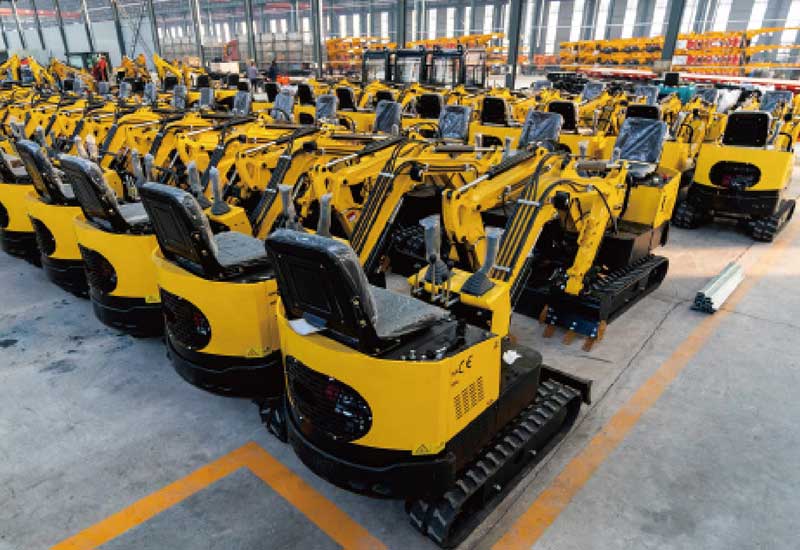
Manufacturing technology is also playing a decisive role in the new compact machinery landscape. Intelligent production lines, precision laser cutting systems, and flexible machining cells have significantly improved consistency and structural accuracy. Flexible manufacturing systems allow factories to switch configurations rapidly, enabling customized orders without sacrificing delivery timelines. For international buyers, this flexibility supports private labeling, color customization, attachment configuration, and market-specific compliance adjustments.
Quality control processes have become more transparent and standardized as global trade buyers demand traceability. Structured inspection checkpoints — from incoming materials to in-process assembly verification and pre-shipment testing — reduce uncertainty for overseas customers. Third-party certifications and audit systems further strengthen buyer confidence. For distributors building their own brands through OEM partnerships, these systems are especially important because product consistency directly affects brand reputation in local markets.
Customization capability has moved from a premium feature to a competitive necessity. Dealers and importers increasingly request configuration adjustments to match local operating habits and regulatory requirements. Examples include climate-specific cooling systems, reinforced filtration for dusty regions, cold-start packages, specialized attachments, and localized operator interface labeling. Manufacturers with engineering support teams and 3D design capability are better positioned to deliver these variations efficiently.
After-sales support expectations have also evolved. Buyers now evaluate supplier responsiveness as carefully as machine specifications. Remote diagnostics, video support, guided troubleshooting, and structured spare parts supply programs reduce downtime risk and improve customer satisfaction. For overseas partners, the availability of multilingual technical support and documented maintenance procedures adds another layer of operational security.
The distributor model is changing alongside equipment design. Rather than purely transactional relationships, many machinery suppliers now build long-term cooperation frameworks with dealers and regional partners. These frameworks may include branding support, marketing materials, technical training, spare parts stocking plans, and coordinated logistics programs. The goal is to strengthen channel partners, not just ship equipment. Stronger partners generate repeat orders and more stable market presence.
Agricultural and landscape sectors are contributing significantly to compact machinery demand growth. Farm operators increasingly seek multi-purpose compact loaders and intelligent mowing systems that can handle feeding, material movement, land preparation, and vegetation management with one base machine and multiple attachments. This versatility aligns with labor constraints and cost control priorities in modern agriculture. Machines that reduce manual workload while remaining easy to maintain are especially valued.
Municipal maintenance departments represent another expanding customer segment. Cities require reliable, easy-to-operate compact equipment for daily infrastructure upkeep, landscaping, road repair, and utility access work. Reliability and parts availability are often more important than maximum performance metrics in these scenarios. Procurement decisions tend to favor suppliers with stable service support and predictable maintenance programs.
Safety and operator comfort have become more prominent evaluation criteria as well. Improved cabin ergonomics, visibility design, vibration reduction, and intuitive controls reduce operator fatigue and training time. Machines that are easier to operate widen the potential labor pool and reduce onboarding cost for contractors. From a buyer’s perspective, human factors engineering is now directly connected to productivity outcomes.
Digital integration is gradually entering compact machinery segments. While full autonomy remains limited, telematics, usage monitoring, maintenance reminders, and performance tracking systems are becoming more common. These features help fleet owners manage utilization and schedule preventive maintenance more effectively. As connectivity costs decrease, adoption is expected to accelerate across compact categories.
From a global trade perspective, supply chain reliability has become a strategic selection factor. Buyers increasingly prefer suppliers with diversified logistics partnerships, flexible shipping terms, and export experience across multiple regions. The ability to support DDP, DDU, CIF, and FOB structures — along with documentation accuracy — reduces transaction friction and improves delivery predictability.
Looking ahead, the compact machinery sector is expected to continue expanding as urban density increases and project fragmentation grows. Smaller, smarter, more versatile machines match the operational reality of modern construction, agriculture, and municipal maintenance. Manufacturers that combine intelligent production, customization flexibility, quality discipline, and responsive support will be best positioned to serve this evolving demand.
For buyers and distributors, the key takeaway is clear: compact machinery is no longer a secondary category. It is now a strategic investment class. Procurement decisions should evaluate not only machine specifications, but manufacturing capability, customization support, lifecycle service structure, and partnership reliability. Those factors together determine long-term return on investment far more than purchase price alone.