
A Practical Buyer’s Guide Covering Performance, Cost, Support, and Supplier Evaluation Standards
Selecting compact construction equipment is no longer a simple price comparison exercise. Professional buyers today operate in a far more complex environment than they did even ten years ago. Project timelines are tighter, labor costs are higher, regulatory standards are stricter, and customer expectations are more demanding. Under these conditions, choosing the right compact machinery — such as mini excavators, compact loaders, rollers, and smart mowing equipment — requires a structured evaluation approach that goes far beyond brochure specifications.
For distributors, contractors, importers, and project owners, procurement mistakes are expensive. A poorly chosen machine can create downtime, maintenance burden, operator frustration, spare parts delays, and resale difficulty. On the other hand, a well-selected machine can deliver years of reliable performance, strong utilization rates, and stable return on investment. The difference comes from how the selection decision is made.
The first professional principle in equipment selection is application clarity. Buyers must define real working scenarios before reviewing models. Many procurement problems begin when machines are selected based on general category labels instead of specific use conditions. Compact equipment is often used across multiple environments — urban construction, agricultural work, municipal maintenance, landscaping, and facility services — but each scenario creates different performance priorities. Ground condition, working space, duty cycle, attachment needs, and transport frequency should all be documented before model comparison begins.
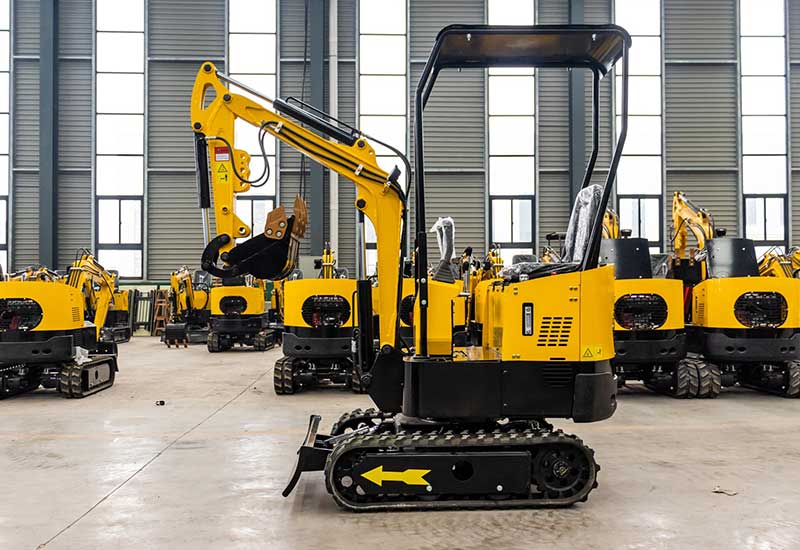
Working space limitation is one of the most decisive variables. In confined environments, machine dimensions and tail swing radius may be more important than engine horsepower. Zero-tail-swing excavators, compact-width loaders, and short turning radius designs enable safe operation near walls, traffic zones, and existing structures. Buyers who overlook dimensional constraints often discover too late that a theoretically powerful machine cannot be used efficiently on actual sites.
Hydraulic system performance is another critical factor that is frequently misunderstood. Many buyers focus on engine power ratings but underestimate hydraulic efficiency. In compact machinery, real productivity depends heavily on hydraulic response speed, flow stability, and multi-function smoothness. Machines with well-tuned hydraulic systems can perform faster cycle times and more precise control even with moderate engine output. Attachment performance — such as breakers, augers, and grapples — depends directly on hydraulic quality, not just raw power.
Attachment compatibility should be evaluated early in the selection process. Modern compact equipment is often expected to perform multiple roles using interchangeable tools. Quick coupler systems, auxiliary hydraulic lines, and control interface compatibility significantly affect versatility. Buyers should verify not only that attachments are supported, but that switching between them is fast and operator-friendly. A machine that theoretically supports many tools but requires complex changeover procedures will see lower real-world utilization.
Transport and redeployment efficiency also deserve structured evaluation. Compact machines are often selected because they can move quickly between job sites. Buyers should examine transport weight, loading method, trailer compatibility, and permit requirements. Machines that can be transported without special permits or heavy hauling equipment provide operational flexibility and cost savings over time. Frequent redeployment favors lighter, compact designs even when larger machines offer higher peak output.
Durability and structural design quality must be examined beyond surface appearance. Frame reinforcement, welding consistency, protective routing of hydraulic lines, and component accessibility all influence long-term reliability. Professional buyers often request detailed photos or inspection videos of structural areas such as boom joints, pivot points, and chassis reinforcement zones. These areas reveal far more about manufacturing discipline than painted exterior panels.
Maintenance accessibility is another professional evaluation dimension. Machines designed with service access in mind reduce maintenance time and labor cost. Easily reachable filters, grouped service points, labeled inspection ports, and modular component layout all improve maintainability. Buyers planning fleet operations should calculate maintenance labor hours as part of lifecycle cost, not treat them as minor details.
Lifecycle cost analysis has become standard practice among experienced equipment buyers. Instead of focusing only on purchase price, professional procurement teams estimate total cost across the expected working life. This includes fuel or energy consumption, maintenance parts frequency, wear component replacement, downtime probability, and resale value. Compact equipment often performs well in lifecycle cost models when reliability and versatility are high.
Supplier evaluation is just as important as machine evaluation. A strong machine supplied by a weak partner still creates operational risk. Buyers should examine supplier production capability, quality control process, export experience, and technical support structure. Factories with intelligent production lines, precision cutting systems, and standardized inspection procedures usually deliver more consistent product quality. Documentation transparency is often a good indicator of process maturity.
Customization capability is increasingly relevant, especially for distributors and private label buyers. Market differences in climate, regulation, and operator preference may require configuration adjustments. Suppliers with engineering support, 3D design capability, and flexible production systems can accommodate these needs more effectively. Custom color, branding plates, attachment packages, and control labeling are common requests that require organized factory coordination.
Certification and compliance verification adds another layer of procurement security. Depending on destination market, buyers may require specific emissions compliance, safety standards, or inspection documentation. Suppliers familiar with international certification processes can streamline compliance preparation and reduce customs or regulatory delays. This experience becomes particularly valuable for first-time importers.
After-sales support structure should be examined before purchase decisions are finalized. Professional buyers request clear support commitments: warranty scope, response time targets, spare parts supply channels, and technical assistance methods. Remote diagnostic support, video troubleshooting guidance, and structured spare parts catalogs significantly reduce post-delivery risk. Support clarity is often more important than extended warranty length alone.
Spare parts logistics deserves detailed discussion during supplier selection. Buyers should confirm parts availability, typical shipping times, recommended spare parts lists, and stocking strategies. Some suppliers support advance spare parts packages bundled with machine orders, which improves early operational stability. Parts standardization across models also improves fleet efficiency.
Communication quality during the quotation stage often predicts future cooperation quality. Suppliers who provide structured answers, technical clarity, and documentation support during pre-sales stages usually maintain similar discipline after orders are placed. Slow, vague, or inconsistent communication during quotation phases is a warning sign professional buyers take seriously.
Testing and inspection methods are also evolving. Many international buyers now request pre-shipment inspection videos, live test demonstrations, or third-party inspection reports. These practices increase transparency and reduce delivery risk. Suppliers familiar with such requirements typically have more mature export workflows.
Market reputation and reference cases provide additional confidence signals. Buyers often look for supplier export history, distributor networks, repeat order patterns, and case references. While newer suppliers can still be strong partners, documented performance history reduces uncertainty.
Financing and trade structure flexibility may also influence supplier selection. Support for different trade terms, payment structures, and logistics arrangements allows buyers to align procurement with their financial planning. Experienced exporters typically provide multiple workable trade structures.
Operator experience should not be overlooked in technical evaluation. Ease of control, visibility, ergonomic layout, and vibration reduction influence real productivity. Machines that operators prefer are used more efficiently and maintained more carefully. Some buyers include operator feedback sessions during model evaluation.
Digital support tools are becoming more relevant even in compact equipment categories. Usage monitoring, maintenance reminders, and performance tracking systems help fleet managers optimize utilization. While not yet universal, digital readiness is an emerging evaluation factor.
In professional procurement practice, the most successful buyers follow a structured comparison framework rather than relying on single-parameter ranking. They evaluate application fit, hydraulic performance, structural durability, maintenance accessibility, supplier capability, support structure, and lifecycle cost together. This multi-factor method reduces risk and improves long-term satisfaction.
Compact construction equipment continues to expand its role across industries because it aligns with modern operational realities: tighter spaces, multi-task requirements, and cost control pressure. Buyers who approach selection with professional evaluation standards will gain the most value from this rapidly evolving equipment category.