
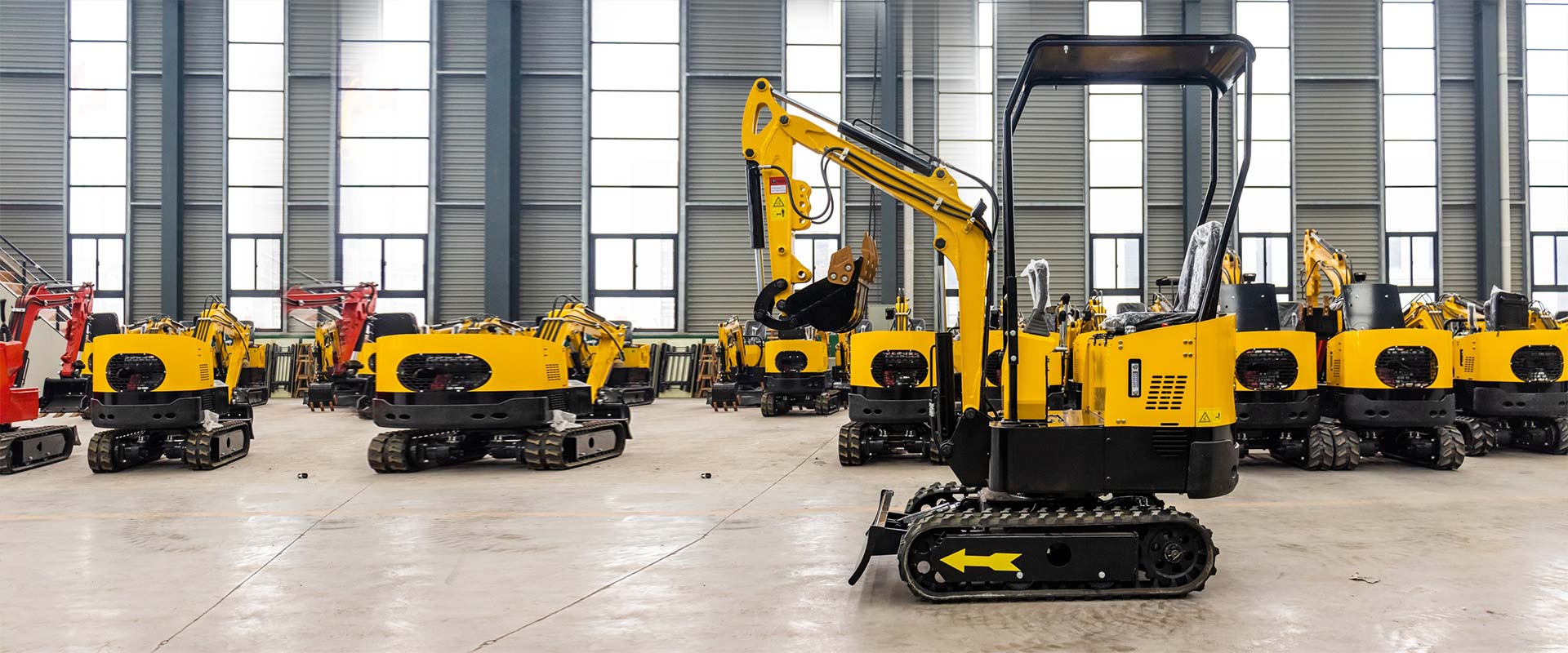
Choosing the right mini excavator is not simply a matter of buying the largest machine within your budget. A machine that is too small may struggle with digging depth, lifting capacity, or hard ground. A machine that is too large may be difficult to transport, unable to enter a restricted jobsite, or unnecessarily expensive to operate.
So, what size mini excavator do you need?
For light garden work, narrow access, shallow trenching, and small residential projects, a mini excavator in the 0.8-to-1.2-ton class may be sufficient. For general landscaping, utility work, drainage, and small construction projects, buyers often consider machines in the 1.5-to-2.5-ton range. Larger compact excavators provide more stability, digging reach, and lifting performance but require more transport capacity and working space.
This is only a starting point. The correct mini excavator size depends on your access width, required digging depth, material weight, ground conditions, attachments, transport limits, and expected daily workload.
This guide explains how to evaluate those factors before selecting a machine.
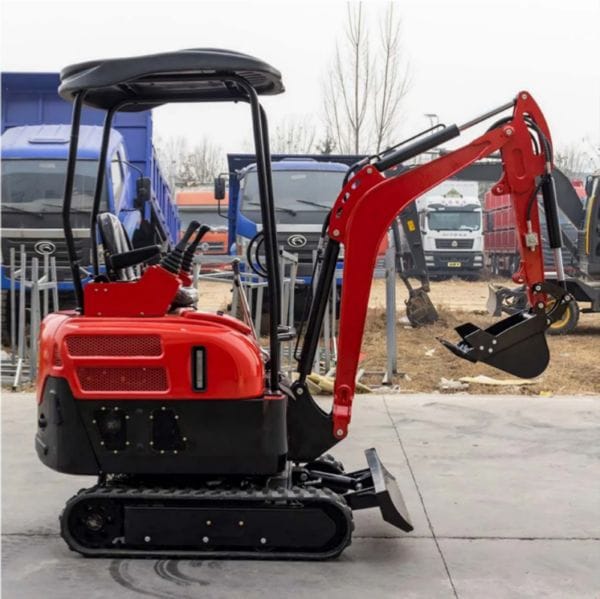
Table of Contents
What Size Mini Excavator Do I Need? Quick Mini Excavator Size Comparison
The following table provides a general starting point. Actual dimensions and performance vary by model, configuration, attachment, and working conditions, so always check the specifications of the machine you are considering.
| Approximate machine class | Common applications | Main advantages | Points to consider |
|---|---|---|---|
| 0.8–1.0 ton | Gardens, narrow passages, light trenching, indoor or courtyard work | Compact, light, easy to transport | Limited digging depth and lifting capacity |
| 1.2–1.5 ton | Landscaping, irrigation, small drainage projects, property maintenance | Good balance between access and performance | May still be too light for demanding excavation |
| 1.8–2.0 ton | Utility work, foundations, farm maintenance, general construction | Better stability, reach, and attachment capability | Requires more transport capacity |
| 2.5–3.0 ton | Heavier landscaping, road maintenance, demolition preparation, commercial work | Higher productivity and lifting performance | Needs more operating and transport space |
| 3.0–3.5 ton | Frequent contractor use and more demanding excavation | Greater stability, digging force, reach, and daily output | Higher purchase, transport, and operating requirements |
These categories should not be treated as fixed industry rules. Two excavators with a similar operating weight can have different widths, digging depths, engine configurations, hydraulic systems, and lifting capacities.
The most reliable approach is to begin with your work requirements and then compare suitable models.
Start with the Work You Need to Complete
Before comparing engines, hydraulic systems, or optional attachments, define the jobs the machine will perform.
Ask the following questions:
- What material will the machine excavate?
- How deep and wide must it dig?
- How much material must be moved each day?
- Will it lift pipes, stones, logs, pallets, or other loads?
- How narrow is the site entrance?
- Will it work near walls, fences, buildings, or traffic?
- Is the ground flat, muddy, rocky, soft, or sloped?
- Which attachments will be required?
- How will the machine be transported?
- Will it be used occasionally or every working day?
A homeowner carrying out occasional garden work has very different requirements from a drainage contractor, rental company, farm operator, or equipment dealer.
The best mini excavator size is the smallest machine that can complete the expected work safely and efficiently without consistently operating at its maximum limit.
Choose the Size Based on Digging Depth
Required digging depth is one of the most important selection factors.
A small excavator may be able to dig a garden trench, but that does not mean it can efficiently complete a deep drainage, foundation, or utility project. If the required depth is close to the machine’s maximum rated digging depth, the operator may have limited flexibility in bucket position and machine placement.
When comparing specifications, consider:
- Maximum digging depth
- Maximum vertical wall digging depth
- Maximum digging reach
- Dumping height
- Ground-level reach
- Bucket capacity
- Boom and arm configuration
Do not choose a machine based only on the deepest point it can theoretically reach. A contractor should leave a practical performance margin, especially when the excavation includes uneven ground, sloped trench walls, buried obstacles, or frequent repositioning.
For example, if a project regularly requires deep trenches, a larger mini excavator may complete the work faster because the operator can maintain a productive digging angle without constantly moving the machine.
If your jobs mainly involve planting, irrigation, cable trenches, or shallow drainage, a smaller machine may be more economical and easier to handle.
Measure Access Width Before Selecting a Machine
Access restrictions are often the deciding factor on residential and urban jobsites.
A powerful excavator is of little use if it cannot pass through the entrance. Before choosing a mini excavator size, measure:
- Gates and doorways
- Side passages between buildings
- Distance between walls and fences
- Height restrictions
- Turning space
- Trailer unloading area
- Space needed to deploy a dozer blade
- Clearance around the upper structure
Do not measure only the narrowest gate. Consider the complete route from the transport vehicle to the working area.
Some compact excavators use adjustable or retractable undercarriages. A narrowed undercarriage can help the machine pass through restricted access points, while an expanded undercarriage can improve stability during operation. However, not every model offers this function, and the machine should only be operated in configurations approved by its manufacturer.
For projects involving gardens, courtyards, greenhouses, interior renovation, or narrow urban spaces, an excavator in the smaller weight classes may offer a major practical advantage.
Consider Machine Width and Tail Swing
Machine width and tail-swing design affect how safely and efficiently an excavator can work in confined areas.
A zero-tail-swing or reduced-tail-swing excavator keeps more of the upper structure within or close to the track width when rotating. This can be useful when working:
- Beside buildings
- Near fences
- Along roads
- Between parked vehicles
- Inside courtyards
- In narrow landscaping areas
- On sites with other machines or workers nearby
A conventional-tail machine may provide a different balance of service access, weight distribution, and performance, but it requires more clearance behind the machine during rotation.
“Zero tail swing” does not mean that the entire machine can rotate safely without checking its surroundings. The boom, arm, bucket, counterweight, blade, and attachments still require clearance. Operators must follow the machine manual and jobsite safety procedures.
When space is limited, compare the complete dimensions of the excavator rather than relying only on its operating weight.
Match the Excavator to the Material and Ground Conditions
The same bucket does not perform equally in every material.
Loose topsoil, sand, gravel, compacted clay, frozen ground, and broken concrete create different demands on the machine. Harder material may require more breakout force, greater machine stability, a narrower bucket, or a hydraulic breaker.
Ground conditions also affect mobility and safety.
Soft or muddy ground
A lighter tracked excavator may reduce ground pressure and cause less surface disturbance. However, very soft ground may still require wider tracks, ground protection mats, or a different work plan.
Rocky or compacted ground
More demanding ground can increase the importance of machine weight, hydraulic performance, digging force, and attachment compatibility. A machine selected only because it fits through a narrow entrance may not provide the required productivity.
Sloped or uneven terrain
Stability becomes especially important. Machine orientation, track position, ground preparation, load location, attachment weight, and operating technique all affect safe performance.
Never assume that a heavier excavator can automatically work safely on every slope. Consult the operator’s manual and complete an appropriate jobsite risk assessment before operating on sloped or unstable ground.
Evaluate Lifting Requirements, Not Just Digging Performance
Mini excavators are frequently used to lift:
- Drainage pipes
- Concrete sections
- Landscape rocks
- Timber
- Small equipment
- Construction materials
- Excavator attachments
Lifting capacity varies with the machine’s configuration, working radius, boom position, lifting height, blade position, ground condition, and whether the load is lifted over the front or side.
A machine may be able to lift a load close to the tracks but not safely handle the same load at full reach.
When comparing mini excavator sizes, request the manufacturer’s lifting chart rather than relying on operating weight or engine power alone. The chart should match the exact model and configuration being considered.
For frequent lifting work, consider:
- Rated lifting capacity
- Working radius
- Machine stability
- Track width
- Blade position
- Boom and arm length
- Attachment weight
- Quick coupler weight
- Hydraulic lifting point
- Load-holding or safety valves where required
Never use the bucket teeth or an improvised connection as a lifting point. Follow the equipment manufacturer’s lifting procedures and applicable workplace rules.
Check the Attachments You Plan to Use
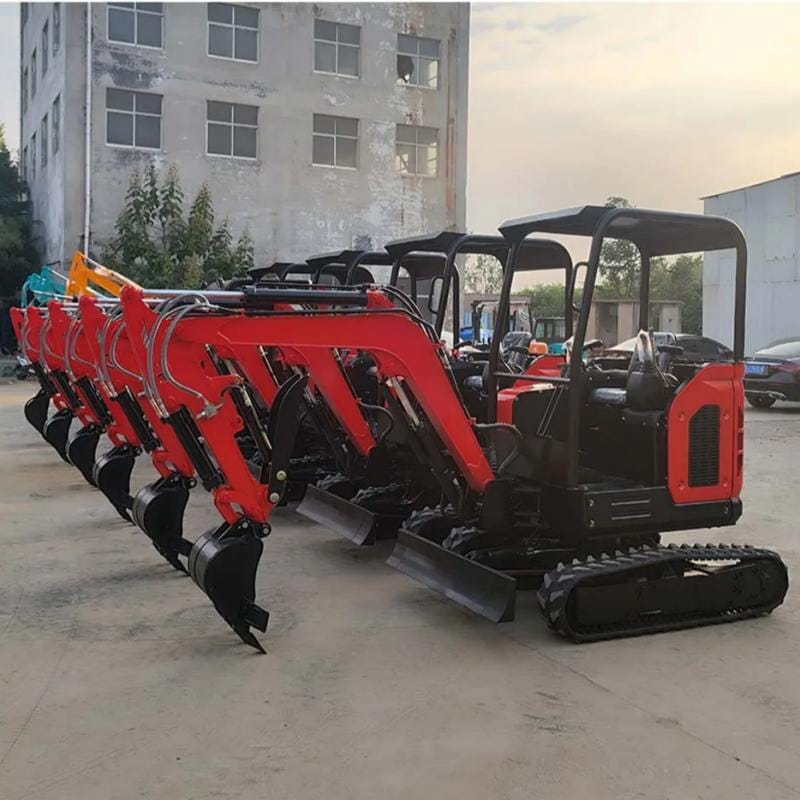
Attachments can turn a compact excavator into a much more versatile machine, but they must be compatible with the excavator.
Common mini excavator attachments include:
- Digging buckets
- Grading buckets
- Narrow trenching buckets
- Hydraulic breakers
- Augers
- Rippers
- Grapples
- Hydraulic thumbs
- Compaction plates
- Rakes
- Quick couplers
When selecting a mini excavator size, do not consider only whether an attachment can physically connect to the machine. You should also check:
- Pin diameter and pin spacing
- Attachment width
- Attachment weight
- Required hydraulic flow
- Required hydraulic pressure
- Auxiliary hydraulic connections
- Return-line requirements
- Machine stability
- Recommended carrier weight
A hydraulic breaker that is too large can place excessive stress on the carrier. An attachment that is too heavy can reduce stability, lifting performance, and usable reach. An attachment that is too small may not provide the required productivity.
Luyue supplies multiple excavator sizes and excavator attachments for different applications. Buyers should confirm the attachment interface and hydraulic requirements before placing an order.
Think About Transport Weight and Dimensions
Transport requirements are sometimes overlooked until after the machine has been purchased.
The weight listed in a product name does not necessarily equal the complete transport weight. Depending on the manufacturer, published specifications may refer to operating weight, machine weight, or a standard configuration.
The actual transported load may also include:
- Bucket
- Quick coupler
- Hydraulic breaker
- Additional attachments
- Fuel
- Spare parts
- Loading ramps
- Trailer accessories
Before selecting a mini excavator size, confirm:
- Complete transport weight
- Overall transport length
- Overall transport width
- Overall transport height
- Trailer or truck capacity
- Tie-down points
- Loading ramp capacity
- Applicable local transport requirements
Transport regulations, driving licence rules, trailer limits, and load-restraint requirements vary by country and region. Buyers should verify local requirements with the relevant transportation authority.
For contractors moving a machine between several small jobs each week, easy transport can be more valuable than maximum digging capacity. For a machine that remains on a long-term construction site, higher productivity may justify a larger size.
Compare Productivity, Not Only Purchase Price
A smaller mini excavator usually requires less transport capacity and may consume less fuel, but it is not automatically the lowest-cost option.
If the machine is too small for the work, it may require:
- More digging cycles
- Smaller bucket loads
- More machine repositioning
- Longer project times
- Greater wear from constant maximum-load operation
- Additional equipment or manual labor
A larger machine may complete the work faster, but it may also increase:
- Initial investment
- Fuel use
- Transport cost
- Storage requirements
- Site access limitations
- Surface disturbance
The correct comparison is the total cost of completing the work, not simply the purchase price of the excavator.
Contractors should estimate:
- Expected working hours per project
- Number of projects per month
- Transport cost per job
- Fuel and routine maintenance
- Operator time
- Attachment requirements
- Expected downtime and parts support
- Estimated output per working hour
A properly sized excavator should provide enough capacity for normal work while remaining practical to transport and operate.
Which Mini Excavator Size Is Best for Landscaping?
Landscaping work often includes:
- Planting trees
- Removing roots
- Digging irrigation trenches
- Preparing drainage
- Building retaining walls
- Moving soil
- Grading small areas
- Installing fences
- Creating ponds
For narrow gardens and lighter excavation, buyers may begin by considering an excavator around the 0.8-to-1.2-ton class. These machines are compact and easier to move through restricted entrances.
For contractors handling retaining walls, larger trees, drainage systems, and frequent material handling, an excavator in the 1.5-to-2.5-ton class may provide a more practical combination of access, stability, digging depth, and attachment capability.
The correct choice depends heavily on the typical site. A landscaping company working mainly in urban backyards may benefit from a different machine than a company maintaining parks, commercial properties, or larger estates.
Which Mini Excavator Size Is Best for Farm Work?
Mini excavators can support many agricultural tasks, including:
- Drainage installation
- Irrigation work
- Fence-post preparation
- Ditch cleaning
- Small foundation work
- Tree and stump removal
- Material handling
- Livestock facility maintenance
A small machine can be useful for occasional maintenance around buildings, gardens, or narrow livestock areas. A larger compact excavator may be more suitable for recurring drainage, ditching, lifting, or tougher ground conditions.
Farm buyers should also consider whether the excavator will need:
- An auger
- A grapple
- A ripper
- A hydraulic thumb
- A grading bucket
- A breaker
- Additional hydraulic circuits
The attachment requirements may determine the correct machine size more clearly than the basic digging task.
Which Mini Excavator Size Is Best for Utility Work?
Utility work may involve trenches for:
- Water pipes
- Drainage systems
- Electrical cables
- Telecommunications
- Irrigation
- Small sewer connections
The machine must fit within the available working area while reaching the required depth. It may also need sufficient lifting capacity to position pipes or structures.
For utility work, buyers should compare:
- Digging depth
- Vertical wall capability
- Bucket width
- Tail-swing clearance
- Machine width
- Lifting chart
- Auxiliary hydraulics
- Transport requirements
A smaller machine may be sufficient for occasional work around buildings or narrow livestock areas. A larger compact excavator may be preferable for recurring drainage, lifting and harder ground conditions.
Luyue’s agricultural equipment solutions cover machinery applications for digging, loading and general farm maintenance.
Farm buyers should also consider attachments such as an auger, grapple, ripper or hydraulic thumb. In many cases, attachment requirements help determine the appropriate machine size.
Should You Buy a 1-Ton or 2-Ton Mini Excavator?
This is one of the most common size comparisons.
A 1-ton mini excavator generally offers:
- Easier access to narrow sites
- Lower transport weight
- Less surface disturbance
- Simpler storage
- Good suitability for light landscaping and shallow trenching
A 2-ton mini excavator generally offers:
- Greater stability
- More digging depth and reach
- Better lifting performance
- Larger practical bucket options
- Better suitability for regular contractor work
- Greater capability with demanding attachments
Choose the smaller machine when access and transport are the main limitations. Choose the larger machine when productivity, lifting, deeper excavation and frequent commercial use are more important.
The LY20-1 2-ton mini excavator can be compared with the smaller LY08 compact excavator to understand how dimensions and working range change between the two size classes.
Buyers requiring more machine weight and bucket capacity can also review the LY25 2.5T Mini Excavator.
A Practical Mini Excavator Selection Checklist
Before requesting a quotation, prepare the following information:
Job requirements
- Main application
- Material to be excavated
- Required digging depth
- Required trench width
- Expected daily workload
- Objects or materials to be lifted
Site conditions
- Minimum entrance width
- Height restrictions
- Available turning space
- Ground type
- Ground slope
- Indoor or outdoor operation
Machine requirements
- Preferred operating weight
- Required track width
- Zero-tail-swing requirement
- Engine preference
- Auxiliary hydraulic requirement
- Required attachments
- Quick-coupler requirement
Transport and purchasing
- Maximum transport weight
- Trailer or truck restrictions
- Destination country
- Local engine or emissions requirements
- Required documentation
- OEM branding or color requirements
- Spare parts package
- Expected order quantity
Providing this information allows a supplier to recommend a suitable configuration rather than simply quoting the cheapest or largest model.
Common Mistakes When Choosing a Mini Excavator
Choosing only by operating weight
Operating weight is useful, but it does not reveal the complete performance of a machine. Compare dimensions, reach, digging force, hydraulics, lifting capacity, and attachment compatibility.
Ignoring the narrowest access point
Measure the entire route to the work area, including gates, corners, overhead obstacles, ramps, and unloading space.
Buying a machine with no performance margin
If every job requires the excavator to work at its maximum depth or lifting limit, a larger model may be more efficient and appropriate.
Forgetting attachment weight
A quick coupler, grapple, breaker, or heavy bucket changes the working weight and may affect stability and lifting capacity.
Comparing engine power alone
More engine power does not automatically mean better digging or lifting performance. Hydraulic design, machine weight, geometry, and stability also matter.
Ignoring parts and technical support
Routine filters, seals, hoses, pins, bushings, track components, and other service parts affect long-term ownership. Buyers should confirm parts availability and technical support before purchasing.
How Luyue Helps Buyers Select a Suitable Machine
Luyue supplies compact construction equipment for contractors, farms, landscape companies, equipment dealers, and importers.
The current mini excavator range includes models across approximately 0.8 to 3.5 tons. Available options depend on the selected model and destination requirements.
Instead of selecting a machine based only on its model name, buyers can provide:
- Intended application
- Required digging depth
- Site access width
- Ground conditions
- Required attachments
- Transport limits
- Destination market
- Expected order quantity
The Luyue team can then help compare suitable models, configuration options, attachments, spare parts, and shipping arrangements.
For complete product information, visit the Luyue construction equipment range or contact the machinery team with your project requirements.
FAQ
What size mini excavator do I need for a backyard?
For narrow backyard access and light landscaping, buyers often consider machines in the 0.8-to-1.2-ton range. However, the correct size depends on gate width, digging depth, soil conditions, lifting needs, and required attachments.
What is the best mini excavator size for landscaping?
Small urban landscaping projects may suit a 0.8-to-1.5-ton excavator. More demanding commercial landscaping, retaining walls, drainage, and material handling may require a 1.8-to-2.5-ton machine or larger.
What attachments should I order with a mini excavator?
The correct package depends on the work. Common choices include digging and grading buckets, a narrow trenching bucket, auger, ripper, grapple, hydraulic thumb, breaker, and quick coupler. Confirm hydraulic and mechanical compatibility before ordering.
How should I compare two mini excavators of the same weight?
Compare machine width, digging depth, reach, bucket force, arm force, lifting chart, hydraulic flow, tail-swing design, track configuration, attachment compatibility, service access, parts support, and complete transport weight.
What information should I send when requesting a quotation?
Provide the application, material type, required depth, access width, ground conditions, attachments, destination country, transport limitations, preferred configuration, and order quantity. This helps the supplier recommend a more suitable model.
Conclusion
What size mini excavator do you need? The answer depends on much more than operating weight.
A smaller excavator may be the best choice when narrow access, low transport weight, and minimal surface disturbance are priorities. A larger machine may be more suitable when the work requires greater digging depth, lifting capacity, stability, attachment performance, and daily productivity.
Explore Luyue’s mini tracked excavators or send your project requirements to receive a model and configuration recommendation.