
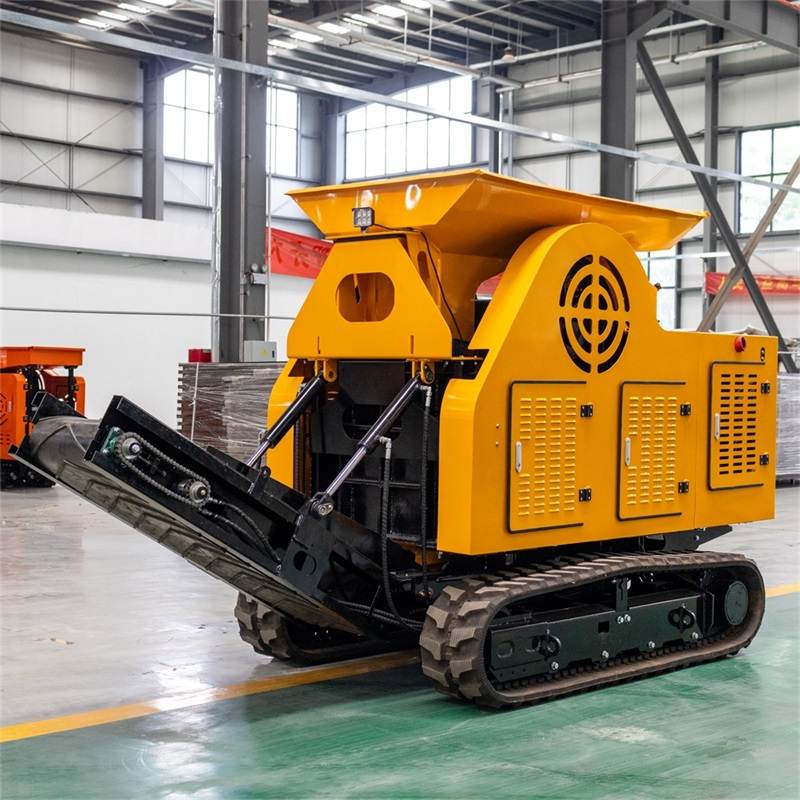
Mobile crusher vs crusher bucket is a practical equipment decision for contractors who need to process concrete on site. The right choice depends on material volume, excavator availability, target output, transport constraints, and how often crushing work appears in the project schedule.
This guide compares both options from a contractor’s perspective so you can match the equipment to your workload instead of choosing by purchase price alone.
Quick Answer: Mobile Crusher vs Crusher Bucket
Choose a crusher bucket when crushing is occasional, material volume is limited, and a compatible excavator is already available. Choose a mobile crusher when you need continuous production, predictable output, independent operation, and a dedicated concrete-recycling workflow.
What Is an Excavator Crusher Bucket?
A crusher bucket is a hydraulic attachment mounted on an excavator. The carrier supplies the hydraulic flow and moves the bucket between loading, crushing, and discharge positions.
Where a crusher bucket works well
- Small demolition and excavation projects
- Remote sites with limited equipment access
- Occasional processing of concrete, brick, or stone
- Jobs where one excavator must perform several tasks
The main constraint is dependence on the excavator. When the excavator is crushing, it cannot simultaneously sort, load, or perform other site work.
What Is a Mobile Crusher?
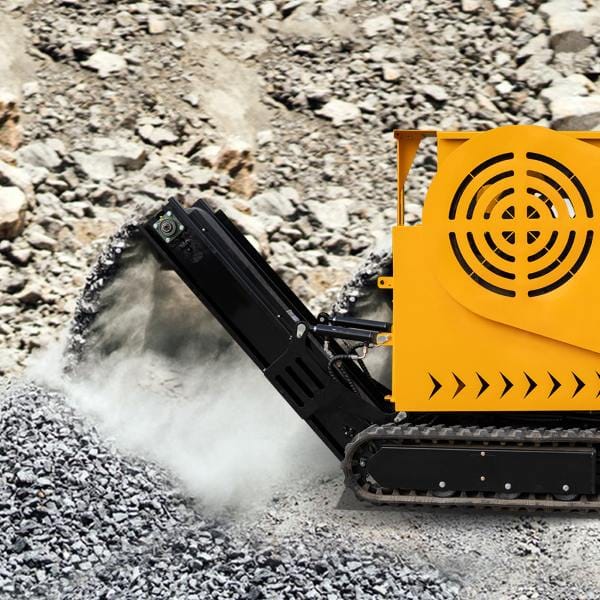
A mobile crusher is a complete machine with its own crushing chamber, power system, hydraulic system, feeder, discharge system, and mobile chassis. It is designed for repeatable material processing rather than attachment-based intermittent work.
Typical mobile crusher applications
- Concrete and demolition waste recycling
- Brick and block reduction
- Aggregate preparation for road base or backfill
- Rental fleets and contract crushing services
Mobile Crusher vs Crusher Bucket Comparison
| Decision factor | Crusher bucket | Mobile crusher |
|---|---|---|
| Best workload | Occasional, low-volume crushing | Regular or continuous crushing |
| Power source | Excavator hydraulics | Independent engine or power unit |
| Production consistency | Depends on carrier and operator cycle | Dedicated feed and crushing cycle |
| Carrier requirement | Compatible excavator required | Loader or excavator mainly feeds material |
| Site flexibility | Easy attachment transport | Independent movement between work zones |
| Best buyer | Small contractor with an existing excavator | Demolition, recycling, rental, and aggregate contractor |
Capacity and Production Planning
Capacity should be evaluated as a workflow, not only as a machine rating. Feed preparation, rebar removal, material size, discharge handling, and operator experience all affect real output.
LUYUE’s compact range includes the LY430 crawler jaw crusher for smaller jobs and the LY510 crawler jaw crusher for higher-volume applications. Confirm the final specification against your feed size, target output, and local emissions requirements before ordering.
Operating Cost and Equipment Utilization
A crusher bucket may reduce initial equipment count when a suitable excavator already exists. However, the calculation should include excavator fuel, operator time, hydraulic wear, attachment maintenance, and the opportunity cost of tying up the carrier.
A mobile crusher adds a dedicated machine but can free the excavator to sort and feed material. For recurring work, parallel operation often matters more than the lowest purchase price.
Material Quality and Rebar Management
Concrete should be inspected before feeding. Oversized pieces may require a breaker, while long or loose rebar should be removed to protect the chamber and downstream equipment. The US Occupational Safety and Health Administration provides general guidance for safe demolition planning in its demolition safety resources.
Final aggregate suitability depends on grading, contamination, and the intended application. For background on recycled aggregate and construction-material recovery, consult the US EPA construction and demolition materials guidance and applicable local standards.
Which Option Fits Your Project?
Choose a crusher bucket if:
- You already own a compatible excavator
- Crushing is an occasional supporting task
- Material volume is small
- Attachment transport is the priority
Choose a mobile crusher if:
- You process concrete regularly
- You need predictable hourly production
- The excavator must remain available for feeding or sorting
- You plan to offer recycling or rental services
Questions to Send a Crusher Supplier
- What are the maximum feed size and adjustable discharge range?
- What output can be expected for my actual material?
- How should rebar and contaminants be handled?
- Which wear parts are included and locally available?
- What are the transport dimensions, operating weight, warranty, and lead time?
Share representative material photos, expected daily tonnage, required output size, and job-site access limits when requesting a recommendation.
Frequently Asked Questions
Is a mobile crusher better than a crusher bucket?
A mobile crusher is generally better for continuous, higher-volume recycling. A crusher bucket is often sufficient for occasional low-volume work.
Which option is cheaper?
A bucket may have a lower entry cost when a suitable excavator is available. A mobile crusher can deliver better long-term value when higher utilization and parallel site work justify dedicated equipment.
Can both machines process reinforced concrete?
Both can process suitable reinforced-concrete feed, but rebar length, feed preparation, and manufacturer limits must be checked before operation.
Can crushed concrete be reused on site?
It may be reused for approved applications such as base or backfill when grading, contamination, and local engineering requirements are satisfied.
What information is needed for an accurate quotation?
Provide material type, feed size, desired output size, target hourly capacity, working hours, transport limits, emissions requirements, and destination country.
Get an Equipment Recommendation
The best mobile crusher vs crusher bucket decision is based on real workload and site constraints. Review LUYUE’s compact crusher options, then contact LUYUE Machinery with material photos and production requirements for a configuration and quotation.