
Mini excavators have become one of the most practical machines for landscaping, small construction, farm maintenance, municipal repair, and rental businesses. Compared with large excavators, a mini excavator is easier to transport, more flexible in narrow work spaces, and more cost-effective for daily digging, trenching, grading, backfilling, and material-handling jobs.
For contractors, dealers, rental companies, and international equipment buyers, choosing the right mini excavator is not just about finding the lowest price. A suitable machine should match the working environment, project requirements, local market demand, attachment needs, and long-term maintenance plan.
This guide explains how to choose the right mini excavator for landscaping and small construction projects, covering machine size, digging performance, engine power, hydraulic system, attachments, maintenance, and supplier selection.
Table of Contents
What Is a Mini Excavator?
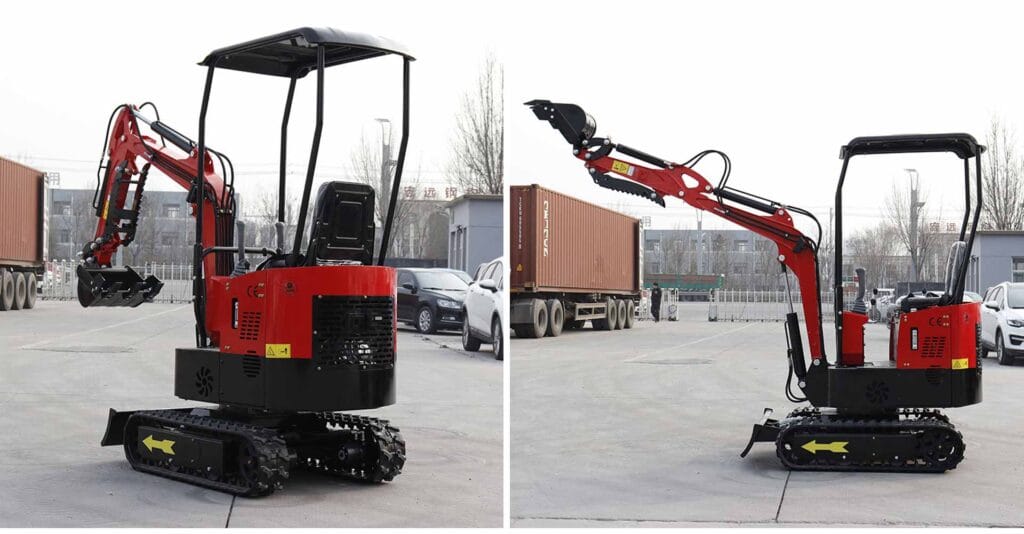
A mini excavator, also called a compact excavator or small excavator, is a small digging machine designed for jobs where large equipment is too heavy, too expensive, or too difficult to operate. It usually features a compact body, rubber tracks, hydraulic digging arm, bucket, and optional attachments.
Mini excavators are widely used in residential construction, landscaping, farm work, municipal maintenance, garden renovation, utility projects, and small jobsite operations. Their compact size allows operators to work in narrow areas such as backyards, sidewalks, greenhouses, orchards, and urban construction sites.
For many buyers, a mini excavator is a flexible investment because one machine can complete many different tasks when matched with suitable attachments.
Common Applications of Mini Excavators
Mini excavators are popular because they can handle multiple types of work with one compact machine. This makes them useful for contractors, rental businesses, farms, landscaping companies, and equipment dealers.
Landscaping and Garden Projects
In landscaping projects, mini excavators are often used for digging, grading, tree planting, soil preparation, small pond construction, fence post installation, and garden renovation. Their compact structure allows them to enter areas where larger machines cannot work.
Small Construction Projects
For small construction jobs, mini excavators can be used for foundation preparation, trench digging, backfilling, site clearing, and small demolition work. Contractors often choose mini excavators because they reduce manual labor and improve jobsite efficiency.
Farm and Agricultural Work
On farms, mini excavators can help with ditch cleaning, irrigation trenching, land maintenance, orchard work, material handling, and small road repair. Compact machines are especially useful for farms with limited access areas.
Municipal and Utility Maintenance
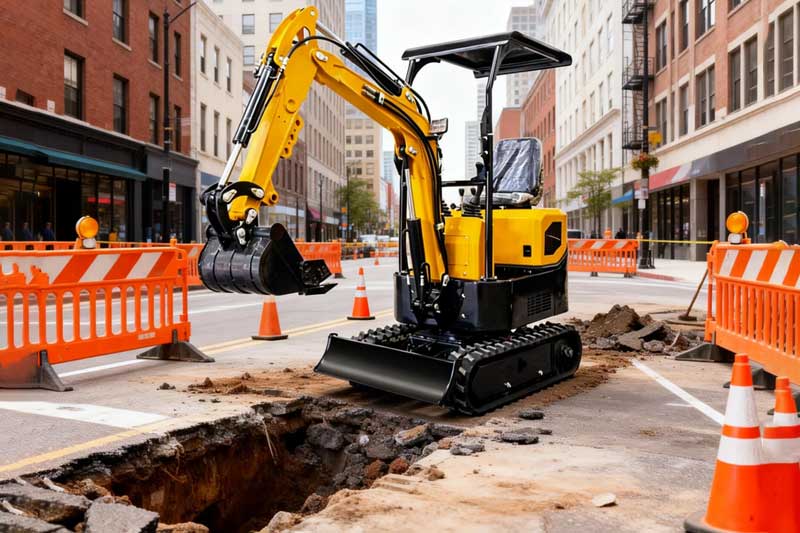
Mini excavators are also suitable for municipal work, such as roadside repair, drainage maintenance, cable trenching, pipe installation, and sidewalk projects. Their small size helps reduce disruption in urban areas.
Why Choosing the Right Mini Excavator Matters
Choosing the wrong mini excavator can lead to low efficiency, high maintenance costs, poor customer satisfaction, and limited application range. For example, a machine that is too small may not have enough digging depth or hydraulic power, while a machine that is too large may be difficult to transport or operate in narrow areas.
For overseas buyers, choosing the right model is even more important. Dealers and importers need machines that match local customer demand. Rental companies need reliable machines that can handle different operators and job conditions. Contractors need equipment that can complete projects efficiently while keeping operating costs under control.
A well-selected mini excavator can help buyers improve work efficiency, reduce labor costs, expand service capabilities, lower transportation costs, increase equipment utilization, support more attachment applications, and improve long-term return on investment.
How to Choose the Right Operating Weight
Operating weight is one of the most important factors when selecting a mini excavator. It affects machine stability, digging power, transportation convenience, ground pressure, and working capacity.
Smaller models are easier to transport and better for narrow areas. Larger models provide stronger digging force, better stability, and deeper digging performance.
| Operating Weight | Suitable Applications | Main Advantages |
|---|---|---|
| 0.8 ton | Gardens, farms, greenhouses, narrow spaces | Easy transport, compact size, low operating cost |
| 1.0 ton | Landscaping, small trenching, residential work | Balanced size and flexibility |
| 1.5–1.8 ton | Utility work, rental fleets, small construction | Better digging force and wider use |
| 2.0–2.5 ton | Construction sites, road repair, foundation work | More stable and more powerful |
| 3.0 ton and above | Heavier small construction projects | Higher productivity and stronger working capacity |
0.8 Ton to 1 Ton Mini Excavators
A 0.8 ton or 1 ton mini excavator is suitable for light-duty projects such as garden work, residential landscaping, greenhouse operation, small trenching, and farm maintenance. These models are easy to transport and can work in very narrow areas.
1.5 Ton to 1.8 Ton Mini Excavators
A 1.5 ton or 1.8 ton mini excavator offers better digging force and working range. It is a practical option for small contractors, rental companies, and buyers who need a machine for different types of projects.
2 Ton to 3 Ton Mini Excavators
A 2 ton to 3 ton mini excavator is more suitable for construction sites, foundation work, road repair, drainage projects, and heavier jobsite tasks. These machines provide stronger hydraulic performance and better stability.
Check Digging Depth and Working Range
Digging depth is another key factor when buying a mini excavator. Different projects require different digging depths. For example, garden planting, irrigation trenches, cable installation, drainage systems, and foundation preparation all have different depth requirements.
Before choosing a model, buyers should compare the maximum digging depth, maximum digging height, maximum unloading height, maximum digging radius, bucket capacity, arm length, and bucket digging force.
Do not choose a machine only by appearance or price. A low-cost machine may not be suitable if the digging depth or working range cannot meet your actual project requirements.
For dealers and importers, it is better to prepare several models with different working ranges. This helps meet the needs of landscaping contractors, small builders, farm users, and rental customers.
Compare Engine Power and Fuel Efficiency
Engine power directly affects machine performance, fuel consumption, and working stability. A mini excavator used for garden work does not need the same power as a machine used for construction or rental applications.
When comparing engine options, buyers should consider engine brand, power output, fuel consumption, emission requirements, noise level, spare parts availability, and maintenance convenience.
For international buyers, engine selection is especially important because different countries may have different emission standards and service requirements. A reliable supplier should be able to recommend suitable engine configurations based on the buyer’s target market.
Fuel efficiency is also important for long-term operation. A machine with lower fuel consumption can help contractors and rental businesses reduce daily operating costs.
Evaluate the Hydraulic System
The hydraulic system is the core of a mini excavator. It controls the digging arm, bucket movement, swing speed, blade operation, and attachment performance. A stable hydraulic system allows the machine to work smoothly and improves operator experience.
Important hydraulic factors include hydraulic pump performance, bucket digging force, arm digging force, control sensitivity, hydraulic oil cooling, hydraulic flow for attachments, and system reliability.
If buyers plan to use hydraulic attachments such as breakers, augers, grapples, or thumbs, hydraulic flow and pressure should be checked carefully before purchasing.
A weak hydraulic system may limit the machine’s performance, especially when working with attachments. For contractors and rental companies, hydraulic reliability is one of the key factors that affects customer satisfaction.
Consider Attachment Compatibility
One of the biggest advantages of a mini excavator is its ability to work with different attachments. With suitable attachments, one machine can complete digging, breaking, drilling, grading, grabbing, and cleaning tasks.
Common mini excavator attachments include standard buckets, narrow buckets, grading buckets, hydraulic breakers, augers, rippers, grapples, thumb clamps, rakes, and quick hitches.
Attachments for Landscaping
For landscaping projects, useful attachments include buckets, augers, rakes, grading buckets, and quick hitches. These attachments help with tree planting, soil preparation, surface leveling, and garden renovation.
Attachments for Small Construction
For small construction projects, hydraulic breakers, rippers, strong buckets, and quick hitches are more commonly used. These attachments help with trenching, light demolition, hard soil work, and material handling.
When choosing a mini excavator supplier, buyers should ask whether attachments can be supplied together with the machine. This can reduce compatibility problems and simplify after-sales support.
Choose the Right Track and Undercarriage
Most mini excavators use rubber tracks because they are suitable for residential areas, gardens, lawns, farms, and paved surfaces. Rubber tracks reduce ground damage and allow the machine to work in sensitive environments.
Buyers should check track width, track material, ground pressure, undercarriage structure, track durability, and ease of replacement.
For landscaping and municipal maintenance, low ground pressure is important because it reduces damage to grass, soil, and finished surfaces. For rough construction sites, durability and stability should be prioritized.
A strong undercarriage also improves machine balance and service life. This is especially important for rental companies because rental machines may be used in many different working conditions.
Pay Attention to Operator Comfort and Safety
A mini excavator may be compact, but operator comfort still matters. Comfortable operation can improve work efficiency, reduce fatigue, and lower the risk of mistakes.
Important comfort and safety features include easy-to-use control levers, a clear instrument panel, a comfortable seat, a safety lock system, a protective canopy or cabin, good visibility, stable machine structure, and emergency stop function.
For rental businesses, simple operation is especially important because different users may operate the machine. A user-friendly design can reduce training time and make the equipment easier to rent.
Safety should not be ignored. Buyers should check whether the machine has a stable structure, reliable braking system, proper hydraulic control, and suitable operator protection.
Check Maintenance and Spare Parts Support
Maintenance is a key factor in the long-term cost of a mini excavator. A machine that is difficult to maintain may cause downtime, delayed projects, and higher service costs.
Buyers should ask whether the supplier can provide an operation manual, maintenance guide, spare parts list, hydraulic parts support, engine service information, track replacement support, bucket and attachment parts, and technical support after delivery.
For dealers and importers, spare parts availability is especially important. Customers expect fast service, so choosing a manufacturer with stable parts supply can improve your local business reputation.
A good mini excavator should have convenient maintenance points, easy access to key components, and clear service instructions.
Mini Excavator for Landscaping: What Buyers Should Focus On
If the machine is mainly used for landscaping, buyers should focus on compact size, easy transport, low ground damage, and attachment flexibility.
Recommended features for landscaping projects include a compact body for narrow spaces, rubber tracks to protect lawns and paving, multiple bucket options, an auger attachment for planting and fencing, a grading bucket for surface leveling, easy trailer transport, low fuel consumption, and simple operation.
Landscaping contractors often work in residential areas where space is limited. A compact mini excavator can enter backyards, gardens, orchards, and narrow access areas more easily than large equipment.
For this type of work, a 0.8 ton to 1.5 ton mini excavator is usually a practical choice.
Mini Excavator for Small Construction: What Buyers Should Focus On
For small construction projects, buyers should focus more on digging force, stability, hydraulic performance, and working depth.
Recommended features for small construction include stronger engine power, higher bucket digging force, a stable undercarriage, hydraulic breaker compatibility, deeper digging depth, durable bucket and arm structure, easy maintenance, and good spare parts support.
Small contractors usually need machines that can handle trenching, foundation preparation, backfilling, site clearing, and light demolition. In this case, a slightly larger model may provide better productivity and durability.
For construction and rental markets, 1.8 ton, 2.5 ton, and 3 ton models often offer better flexibility.
Common Mistakes When Buying a Mini Excavator
Many buyers focus too much on price and ignore long-term performance. This can lead to poor work efficiency, frequent repairs, and low customer satisfaction.
Common mistakes include choosing the cheapest model without checking specifications, ignoring digging depth and hydraulic performance, buying a machine without spare parts support, not confirming attachment compatibility, choosing the wrong operating weight for the target market, ignoring engine and emission requirements, not checking supplier manufacturing experience, and overlooking after-sales service.
A good mini excavator should match your project needs, local market demand, and long-term service plan. For international buyers, the lowest price is not always the best choice. Stable quality, spare parts supply, and supplier support are more important for long-term business.
How to Choose a Reliable Mini Excavator Supplier
For overseas buyers, selecting the right supplier is just as important as choosing the right machine. A reliable manufacturer can help reduce risks in product quality, delivery, customization, and after-sales service.
Before placing an order, buyers should check the supplier’s factory experience in compact construction equipment, available mini excavator models and specifications, OEM and customization capability, quality control process, export experience, spare parts supply, warranty policy, technical support, packing method, and shipping experience.
A professional supplier should not only sell machines but also help buyers choose suitable models for their market.
If you are a dealer, importer, or rental company, it is better to work with a supplier that can provide stable production, model options, attachments, technical support, and long-term spare parts service.
Why Choose Luyue Machinery for Mini Excavators?
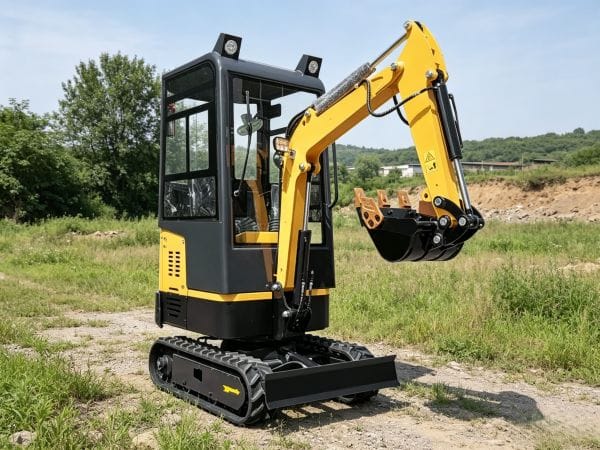
Luyue Machinery provides compact construction equipment for global buyers, including mini excavators, skid steer loaders, remote control lawn mowers, crawler jaw crushers, and related attachments. For buyers looking for flexible and practical machines, Luyue offers different mini excavator options suitable for landscaping, farm work, municipal maintenance, and small construction projects.
Whether you are an equipment dealer, rental company, contractor, or importer, choosing the right mini excavator can help improve working efficiency and expand your business. Luyue Machinery can support buyers with product selection, machine configuration, attachments, OEM options, and export service.
If you are looking for a compact mini excavator for your market, contact Luyue Machinery to get more product details and a quotation.
FAQ
What size mini excavator is best for landscaping?
For most landscaping projects, a 0.8 ton to 1.5 ton mini excavator is usually suitable. These machines are compact, easy to transport, and suitable for gardens, residential areas, tree planting, trenching, grading, and light-duty digging work.
Can a mini excavator use different attachments?
Yes. Mini excavators can work with buckets, hydraulic breakers, augers, rippers, grapples, thumbs, rakes, and quick hitches. Buyers should confirm hydraulic flow and attachment compatibility before ordering.
Is a 1 ton mini excavator enough for small construction?
A 1 ton mini excavator is suitable for light construction, trenching, garden work, and small foundation jobs. For heavier construction or rental use, buyers may consider 1.8 ton, 2.5 ton, or larger models.
Why do landscaping contractors use rubber track mini excavators?
Rubber tracks reduce ground damage and provide better mobility on lawns, gardens, paved surfaces, and residential areas. They are more suitable for landscaping work than steel tracks.
How can overseas buyers choose a reliable mini excavator manufacturer?
Overseas buyers should check the supplier’s product range, factory experience, quality control, export experience, spare parts support, warranty policy, and customization capability before ordering.
What should dealers consider when importing mini excavators?
Dealers should consider local market demand, popular machine sizes, engine options, spare parts support, attachment compatibility, warranty terms, and supplier production capacity. Choosing a reliable manufacturer helps reduce long-term business risk.